

















The ABS found that 26.0% of people waited longer than they felt was acceptable for a GP appointment in 2024-25. 49.5% of patients in regional areas or suburbs have waited 24 hours or more for urgent GP care.
But HotDoc brought a good solution for both patients and practitioners. It offers a portal for patients to book doctor appointments. The admin features help clinics and healthcare providers manage patients more efficiently. The app sees 70,000+ bookings every day.
HotDoc is a success because it bridges the gap between patients needing a slot and actually getting one. This guide will explain what it takes to build a healthcare app like HotDoc. We’ll share the features that your MVP will need, the costs you can expect, and the development process.
Quick answer: A good doctor appointment booking app should have a simple patient booking journey. The MVP should include a practice dashboard, clear appointment-booking rules, and reliable calendar sync. Budget around AUD 40,000 to 1 50,000 for the first release. A complex medical appointment booking app with advanced features and multiple integrations may push the cost to around AUD 150,000 to 400,000+. Plan out the integration and feature scope before you start development.
What Are the Essential Features to Start Doctor Appointment App Development the HotDoc Way?
Here are the seven features that make HotDoc a reliable and successful application in Australia.
1. Doctor search and detailed healthcare professional profile
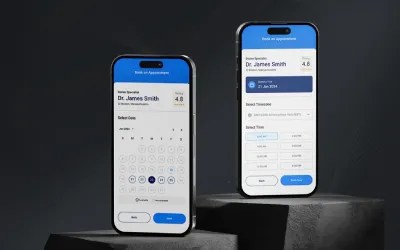
When patients are searching for healthcare services, they use location, practitioner experience, specialisation, language, and appointment type to guide their search. A healthcare practitioner profile should clearly highlight visit fees, clinic operating hours, and new patient availability. Ensure that the information is updated. Patients should not need to call the Clinic to get the basic details.
2. Patient accounts and family booking
Many Australian households have a single person managing healthcare appointments for the family. Therefore, your app should have appointment history and offer the option to book for someone else. The patient should be able to upload the contact details individually or as a group. Keep the holder account separate from the patient receiving the care. As per the legal Australian guidelines, maintain appropriate consent and access control. HotDoc specifically asks users to confirm consent for both family booking and individual patient appointments.
3. Live availability and appointment rules
Patients may want to visit a clinic for regular consultations, vaccination or longer daycare appointments. (dental cleaning, wound dressing, etc.). Your app needs to support appointment, duration, practitioner availability, and consultation mode (telehealth or in-person). Users should be able to recheck the slot before confirming. This is especially important to avoid double-booking the same time slot.
4. Staff control and practice software integration
After developing the patient features, you need to think about admin/practice controls. Before showing any open slot to the patient, the app should confirm practitioner availability. It needs to have features like synchronising changes and flagging failed updates or patient data mismatches to reception. Best practice uses an approved partner ecosystem while medical-directed documents—HotDocs two-way appointment booking integration.
5. Appointment confirmation, reminders and booking changes
The clinic should be able to automate appointment confirmation messages via email or SMS. Patients must have configurable reminders with clear cancellation or scheduling options. Every change must sync properly and update the practice calendar. Clearly show the patient and the healthcare organisation whether an appointment is requested, confirmed, or cancelled. Make messaging failures visible to the staff.
6. Digital intake forms and check-in
Digital intake forms should only collect necessary information. Different appointments may require specialised intake forms. Where necessary, enable patients to check in for the appointment and update their details. Clearly define which changes require staff or doctor review before they reach the patient record.
7. Payment integration and optional telehealth appointment
Cover consultation payments, deposits, cancellation terms and receipts. Video consults are an add-on workflow, with clear joining instructions and a fallback if the connection drops.
For reference, HotDoc’s own catalogue lists 24/7 online booking, integration with practice software and phone telehealth consultations. Treat those as HotDoc’s documented features, not a checklist for your first release.
Appointment Booking App Development Cost in Australia
Then there are the running costs: hosting, messaging, vendor and API charges, support and maintenance. One Australian guide suggests budgeting around 15-20% of the build cost per year to keep an app healthy.
How to Build an App Like HotDoc
- Define the service. Pick a single-practice product, a clinic-group platform or a marketplace, and decide who pays.
- Validate integration access. Confirm the practice software, supported operations, vendor requirements and commercial terms.
- Prototype the booking journey. Walk patients, reception staff and practice managers through it.
- Build and test. Try competing bookings, cancellations, duplicate patient records, failed syncs and access permissions.
- Pilot with a practice. Track booking completion, sync failures, reception interventions and patient feedback before expanding.
HouseVizit: Giving Doctors Context Before the Appointment

For HouseVizit, VT Digital introduced an AI chatbot and natural language processing to gather patient information before consultations. Questions were adapted to the patient’s symptoms, and doctors could review pre-consultation summaries.
The work connected intake with the next step in care: helping clinicians arrive at the consultation with patient context already available. It’s a practical example of developing around a care workflow. (Explore HouseVizit)
Protect Patient Data Throughout the Booking Journey
Under OAIC guidance, appointment and billing details count as health information. That makes privacy a design decision from day one in healthcare app development in Australia. Collect only what you need, get appropriate consent, use secure authentication, restrict staff access, encrypt data and keep audit records. Set retention rules and check every third-party service. These duties cover the app, the backend and the integrations. Hosting in Australia alone doesn’t make you compliant. oaic
Podcast: How to Build a Doctor Booking App That Simplifies Patient Scheduling

What does it take to build a doctor booking app like HotDoc? In this episode, we go through the features patients use and the systems clinics depend on behind the scenes.
We cover doctor search, patient accounts, booking for family members, live availability, and connecting with practice management software. We also get into appointment reminders, digital intake forms, payments, and whether telehealth is worth adding.
Then we talk money and logistics: what an app like this costs to build in Australia, how development usually unfolds, where integrations tend to get messy, and what you need to do to protect patient data.
If you’re planning a healthcare booking app, this one’s for you.
 Press play and listen.
Conclusion

A good medical appointment booking app comes down to a reliable booking journey. Define your clinic workflows, confirm integration access early and scope a first release you can actually finish.
FAQs
How much does it cost to build an app like HotDoc?
A focused booking app like HotDoc sits around AUD 40,000 to 1 50,000. Multi-clinic formats with connectors, payments, and Telehealth features run around AUD 150,000 to 400,000+.
What features does a doctor appointment booking app need?
Practice profiles, patient accounts, live availability, practice software integration, reminders, intake forms and payments. Telehealth is optional.
How do appointment booking apps make money?
Can a booking app integrate with practice software like Best Practice or MedicalDirector?
Yes, but only with approved access and a technical assessment from each vendor. Confirm this early.
How long does it take to build a doctor appointment app?
A focused first release usually takes a few months. Integration approvals can stretch that, so start those conversations first.
How do you keep patient data secure in Australia?
Collect only what you need, use strong authentication, encryption and access controls, keep audit logs and review every third-party service against OAIC guidance.


Technical Lead
Himangi is currently working as a Technical Lead at VT Digital. She has nearly 10 years of software engineering experience. Since 2016, Himangi has built and architected applications across native Android (Kotlin) and Flutter (Mobile & Web). She specializes in building scalable cross-platform systems, optimizing engineering processes, and leveraging AI tools to push the boundaries of mobile development.