
















Planning a Mental Health App? Australian Costs and Rules for 2027
Imagine finishing work, opening a well-being app, and facing twenty questions before you can play a breathing exercise. You close it. The app had plenty of features; getting to the useful one took too much effort.
That’s a practical starting point for mental health app development: make the first useful action easy. The need is substantial. The ABS’s 2020–2022 study found that 4.3 million Australians aged 16–85 experienced a mental disorder in the preceding year. A useful product still needs a specific audience and a clear purpose.
Quick answer. Mental health app development costs AUD 40,000 to 150,000 for an MVP. Clinical features can push that much higher. Start with simple check-ins, reviewed content and privacy controls. Then work out whether your planned features bring you under TGA regulation. Treat all user data as sensitive health information. And budget about 20% of the build cost each year for upkeep.
Decide what kind of mental health app you’re building.
For wellness app development in Australia, define your audience and purpose before commissioning screens.

Your choice shapes the features, budget and regulatory requirements.
What features should a mental health app include?
Fewer than you think. People open these apps on hard days. Every extra screen costs trust. Good mental health app development starts with a short list, and a short list keeps the build cost down too. In wellness app development in Australia, each feature has to earn its place.
Short, calm onboarding
Ask only what the app needs to get started. A name, a goal or a rough check-in is enough. Anything deeper can wait. Every extra form field on day one is a reason to close the app for good.
Mood and stress tracking
A daily check-in shouldn’t take more than 15 seconds. Give users a quick tap scale and an optional feature. After a week, patterns start to show, and people see what sets off their worst days. That’s the habit that keeps them coming back, so put your design time here.
Guided meditation and CBT-style exercises
With meditation app development you can give your users something to do. Include breathing, meditation, and thought-record exercises.
Write the content with a licensed clinician and cite the guidelines. In Australia, that also matters for TGA scope, because the guidelines must be visible inside the app.
Smart reminders
Let users pick when they hear from you. They should be able to set how often, snooze or turn reminders off. A nudge shouldn’t feel like pressure. On a rough week, a reminder that nags does more harm than no reminder at all.
Progress insights
Simple charts work best. Think mood over four weeks or sessions completed. They show users their effort is paying off. Keep the language encouraging and the numbers easy to read. Describe patterns, but don’t diagnose. That keeps your claims on the right side of TGA rules.
A visible crisis pathway
Put Lifeline (13 11 14), Beyond Blue (1300 22 4636), and 000 one tap from every main screen. Test this pathway as seriously as you’d test payments. It’s a safety feature first. It also builds the trust that keeps people coming back.
Advanced features to add once the core works
Does a mental health app need TGA approval?
Not always, and the line is finer than most founders expect. Under item 14E of the TGA’s exclusion rules, a digital mental health tool can sit outside medical device regulation if it supports mental health, follows established clinical practice guidelines, and shows those guidelines to users inside the app. The TGA’s March 2026 guidance spells out that test.
Things change if your software diagnoses, recommends treatment or delivers a new therapy. The TGA says chatbots and language models that give diagnostic or treatment recommendations can be regulated, and your marketing copy counts as evidence of what the app is for. Software as a medical device is also one of the TGA’s 12 enforcement priorities for 2026 to 2027. Scope your claims before design starts, not after launch.
How do you protect sensitive user data in a mental health app?
If you provide a health service, the Privacy Act applies regardless of your turnover. Since June 2025, a statutory tort for serious invasions of privacy means a leaked mood log can also become a lawsuit.
In practice, here’s what you must do to avoid privacy breach lawsuits:
- Encrypt healthcare data.
- Collect the minimum information
- Explain data use and obtain valid consent where required
- Restrict access by role
- Keep advertising tools away from mood data.
- Give users a way to delete their records.
- Host data in Australia. But native hosting alone cannot establish compliance: overseas processing and disclosure still need assessment.
- Review analytics, video, and AI suppliers.
- Prepare a breach-response plan
If your app includes a chatbot, note that the Digital Duty of Care Bill, which targets bots that foster children’s emotional dependence, has passed the House but not yet the Senate.
How much does it cost to build a mental health app in Australia?
Meditation app development sits at the lower end. Add accounts, payments, and clinicians, and the price climbs.
Clinical reviews, security testing, and privacy assessments typically add to these figures. Budget about 20% of the build cost every year for maintenance.
How do mental health and wellness apps make money?
Subscriptions suit most wellness apps. In-app purchases for premium courses, licensing to employers, clinics, or schools, and freemium all work too. Advertising is the weakest fit: Australia’s population is under 28 million, and mixing ads with mood data invites scrutiny. Apple’s Small Business Program takes 15% for developers earning under US$1 million. Choose the model before design, because it decides your screens.
What a calm, trusted build looks like: the MindSurf case study
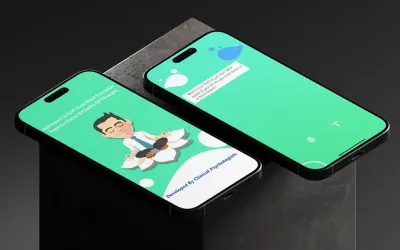
Our client wanted an app to help people overcome anxiety and manage stress. We built MindSurf for iOS and Android with a stress management tracker, feedback based on user preferences, reminders and notifications, and a calming colour palette. Firebase Crash Analytics monitored performance after launch. In-app purchases and Google AdMob supported monetisation.
The results:
- 15,000+ downloads
- 64% boost in user retention
- 41% increase in daily active users
- 2.7x growth in average session duration
Podcast: How to Develop a Mental Health App People Actually Use

What goes into building a mental health app that people actually want to use? From simple meditation platforms to advanced digital therapy solutions, this episode explores the key elements of mental health app development in Australia.
We cover must-have features, estimated development budgets, project timelines, monetisation models, and the importance of protecting sensitive health information. TGA requirements and Australian privacy regulations are also part of the discussion.
Plus, get a closer look at VT Digital's MindSurf case study and its impressive user engagement results. Perfect for entrepreneurs, startups, and healthcare businesses exploring digital wellness solutions.
 Press play and listen.
Start with a clear scope

Start with the basic features like short onboarding, plain-language consent, and crisis help one tap away. If you’re scoping a build, our healthcare app development company team can map features, TGA scope, and privacy obligations before you commit to a budget. This is general information, not legal advice.
FAQs
How much does it cost to build a mental health app in Australia?
Releasing an MVP will cost you around AUD 40,000 to 150,000. A simple meditation app can start near AUD 10,000. Advanced features like clinician video, AI, and custom backends push past AUD 150,000.
What features should a mental health app include?
Start with short onboarding and mood tracking. Integrate guided content, reminders, and a visible crisis pathway. Clear consent should definitely be there. Add clinician tools and AI only once the core earns retention.
Does a mental health app need TGA approval?
Not if it just supports mental health. Approval is exempt if your app follows established clinical guidelines and displays them. Diagnosis, treatment claims, or novel therapies will need approval.
How do you protect sensitive user data in a mental health app?
Encrypt and collect minimum data. Host in Australia. Limit access by role. Give your users a deletion option. Disclose automated decisions in your privacy policy from 10 December 2026.
How do mental health and wellness apps make money?
Subscriptions and in-app purchases are the most common ways to make money. Other options include licensing to employers or clinics and freemium.
How long does it take to build a mental health app?
One to three months for a simple app. Three to six months with accounts and payments. Six to twelve months for complex builds.


Technical Lead
Himangi is currently working as a Technical Lead at VT Digital. She has nearly 10 years of software engineering experience. Since 2016, Himangi has built and architected applications across native Android (Kotlin) and Flutter (Mobile & Web). She specializes in building scalable cross-platform systems, optimizing engineering processes, and leveraging AI tools to push the boundaries of mobile development.