



















Designing a Ride-Hailing Platform for Australia’s Regulated-Worker Framework

An electric fleet changes the operating model, not just the vehicles. Charging becomes a scheduling problem, energy becomes a procurement decision, and the depot becomes infrastructure. Our EV fleet management software work starts where those three meet.
Electrification projects fail on infrastructure and driver behaviour more often than on software. We look at both before building anything.
How far your vehicles actually travel, when they sit idle, and which runs an EV can cover today.
Site by site, then ongoing tuning as tariffs, vehicles and charging infrastructure change.
What your drivers see, what your depot manager controls, and the energy, battery and reporting layers underneath.
Drivers see their vehicle's charge, the range it gives them against today's work, and where to top up without losing an hour.
VT Digital is an Australian-owned EV fleet management software company delivering intelligent solutions that help businesses optimize charging, reduce operating costs, and improve fleet efficiency.
Ambare-e is a live driver app covering home, public and semi-public charging. Not a case study we are hoping to win.
An idle vehicle earns nothing. We build around departure times and tariffs, not around charger counts.
Electric and petrol will sit in the same depot for years. One platform, one set of numbers, no spreadsheet in between.
You own the source code and the IP. Your charging data stays yours to export whenever you want it.
Fleet platforms are built for delivery vans and council cars. Eight things a passenger operation needs that none of them ship with.
A driver wants to know what they cleared tonight. Fleet platforms report energy cost to the operator and stop there.
Vehicles have to be ready for the shift they are rostered to, not just charged by morning. The two are not the same problem.
Captured per booking and lodged monthly. No fleet platform in the world knows what that is.
Half your drivers may not be employees. Vehicle assignment, charging cost and reimbursement all work differently for them.
Cost per kilometre is useful. Margin per trip is what tells you whether the airport run is worth taking in an EV.
An NDIS trip, a Cabcharge job and a street hail each carry different records. Energy data has to attach to all three.
A delivery van charges at the depot. A rideshare car charges wherever it happens to be, on somebody else's network.
Wheelchair-accessible vehicles have different range, different duty cycles and different availability rules.
At VT Digital, we take great pride in providing top-notch service and results that truly make a difference. Our client reviews showcase the trust and satisfaction of our mates who have worked with us. Dive into their stories and find out how we can help you reach your goals!
Discover EV fleet insights, charging strategies, battery management tips, and fleet optimisation guidance from our mobility experts.
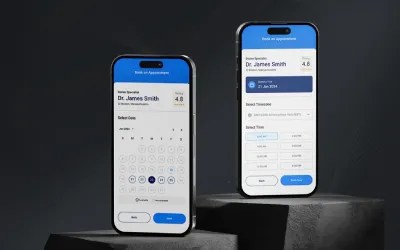
Designing a Ride-Hailing Platform for Australia’s Regulated-Worker Framework

Top 8 Software Development Trends Shaping Australian Businesses in 2026
Why Australian Enterprises Are Choosing Custom Software Development
AI in Software Development: Key Benefits and Challenges
We Understand Your Questions
It tracks vehicles, charging and energy use in one place. Beyond ordinary fleet software it handles state of charge, charge scheduling against tariffs, battery health and cost per kilometre in energy rather than fuel.
Mostly by moving charging off peak tariffs and out of public rapid chargers. It also keeps vehicles ready for their rostered shift, which is where utilisation is won, and produces the emissions figures corporate clients ask for.
State of charge, state of health, energy consumed per kilometre, charging session detail, depth of discharge, fast charging frequency and range decline over time. Available through telematics or direct from the vehicle API.
We start with duty cycles. Which vehicles travel distances an EV covers comfortably today, what depot charging that needs, and what it costs. Operators usually electrify one run type at a time rather than the whole fleet.
Yes. Geotab, Samsara, Teletrac Navman and Webfleet on telematics. Depot chargers over OCPP, and public sessions through Chargefox, Evie, JOLT and Ampol reconciled back to the right driver.
Yes, and most Australian operators need exactly that. Both vehicle types sit in one console with cost per kilometre comparable across them, so you can see whether electrification is working.
Sydney: Three International Towers, Suite 103 Level 24/300 Barangaroo Ave, Barangaroo NSW 2000, Australia
Get in touch with us! Fill out the form below with your Info. We'll respond to your inquiry as soon as possible. Looking forward to hearing from you!