















Quick answer:
The AI businesses making money in Australia solve one specific problem for one specific industry. Service-led models like compliance advisory and implementation consulting start cheap and can invoice within a fortnight. Product-led models like vertical SaaS need six figures and most of a year.
Two dates and one number are worth knowing before you start. The R&D Tax Incentive gives eligible companies under $20 million turnover a 43.5% refundable offset. A new automated decision-making disclosure obligation starts 10 December 2026. And Australian business goes quiet for six weeks over summer, which quietly removes an eighth of your trading year.
First, the numbers everyone quotes wrong
You'll hear three very different adoption figures at conferences this year. All three are correct, which is the problem.
The Australian Bureau of Statistics found around 12% of Australian businesses reported using AI in 2024–25, up from 1% two years earlier. Big jump, still a small minority. Large businesses sat at 35% and medium at 22%.
The National AI Centre's SME AI Pulse says 43% to 44%. Different number because it's a different question. That survey counts an owner who used ChatGPT to write a Facebook post last month.
Then there's the MYOB number that should shape what you build. In its Business Monitor survey of more than a thousand SMEs, 46% said they aren't using AI and have no plans to over the next twelve months. Nearly half the market has actively decided against it, while the businesses that did adopt are mostly using it internally to tidy up emails and draft posts.
So the honest read on Australia right now is a country where adoption is wide, shallow, and almost invisible on the P&L.
That leaves three groups of buyers, and they buy nothing like each other.
- The stalled. The National AI Centre found 19% of non-adopting SMEs say they don't know how to use AI in their business, and around 65% say they either distrust AI decisions or want to keep humans in control. These aren't sceptics, they're disoriented, and they buy guidance.
- The disappointed. Bought licences, ran a pilot, measured nothing, and now have a director who's gone quiet on the subject. They buy proof.
- The bottlenecked. Rostering across fourteen aged care sites. Claims triage after a flood. Quoting at the kitchen table. They've got a number that hurts and they'll pay properly to move it.
Build for the third group. Sell to the first two while you do.
Before we get to the list, two things about selling here
Australian buyers can smell a pitch from the car park.
Walk into an SME with slides about transformation and you've lost them in ninety seconds. Walk in with "your quoting takes two hours a night, I can get it to twenty minutes, here's what that's worth to you" and you'll get a second meeting. Understatement works here in a way it doesn't in the US market. Say less than you can deliver.
We're a small market and you'll hit the wall sooner than you think.
Twenty-six million people, and the addressable slice for a niche B2B product is often a few thousand businesses nationally. A vertical SaaS play aimed at Australian veterinary clinics has maybe 3,000 possible customers and you'll never get all of them. That's fine if you charge properly. It's fatal if you priced low assuming SaaS volume economics. Either charge like a specialist, or plan for New Zealand and the UK from the start rather than treating export as something you'll sort out in year three.
How to read the list
Each idea below has three markers rather than a price tag.
Startup cost sits in one of three bands. Low means under about ten thousand dollars, mostly your time. Moderate means tens of thousands, usually because you're building something small but real. Substantial means six figures before a customer pays you, which is the honest cost of anything sold into a regulated or enterprise buyer.
Time to first revenue is how long before money arrives, not how long before the product is finished.
How it's priced tells you the shape of the revenue, since a per-seat subscription and an annual enterprise licence are completely different businesses even when the annual figure is similar.
We've kept these general on purpose. Real numbers swing enormously on where your team sits, how much you build versus buy, and whether you're selling to a two-person agency or a listed company. Anyone quoting a precise figure for a business that doesn't exist yet is guessing at you. If you want actual project budgets, our breakdown of AI development cost in Australia works through real ones.
1. AI compliance and disclosure services
Here's a deadline almost nobody in Australian business has clocked.
From 10 December 2026, new Australian Privacy Principle 1.7 requires organisations covered by the Privacy Act to disclose automated decision-making in their privacy policy, where personal information is used to make or substantially help make decisions that significantly affect someone's rights or interests. It applies to decisions made from that date, whenever the system was built. The OAIC has been consulting on its guidance and intends to publish before commencement.
Credit assessment is captured. So is insurance quoting, tenant screening and shortlisting job applicants. Most of the businesses doing those things have no idea it's coming.
Your addressable market got considerably bigger on 1 July 2026, too. Under the AML/CTF reforms, reporting entities have to comply with the Privacy Act when handling personal information for their AML/CTF obligations, including small businesses turning over less than $3 million. That pulls real estate agencies, conveyancers, accountants and law firms into privacy obligations many of them assumed didn't apply to them.
Short window, no capital required, and the phone call writes itself.
How it's priced: fixed-fee audit, then a monthly governance retainer
Startup cost: low
Time to first revenue: weeks
Hardest part: you need genuine privacy competence. Partner with a privacy lawyer, sell the technical assessment alongside their legal opinion, split the account. It's close to what an AI consulting engagement already covers.
2. Vertical AI agents for trades and field services
Back to that kitchen table.
Electrical, plumbing, HVAC and solar businesses running five to fifty field staff are already on ServiceM8, simPRO or AroFlo. The job data's there. What's missing is anything that turns a site photo and forty seconds of voice notes into a quote the owner can approve on the drive home.
The product is the integration. A brilliant model sitting in its own window won't get used past the first fortnight, which makes this custom software development rather than a clever prompt.
How it's priced: per-seat monthly subscription, or run as a managed service
Startup cost: moderate to substantial
Time to first revenue: six to nine months
Hardest part: distribution rather than engineering. Trades buy from people they already know, so get in front of the platforms and the industry associations before you write any code.
3. Bookkeeping and BAS automation for micro-businesses
Reconciliation and receipt capture, then the quarterly BAS scramble. It happens constantly, needs almost no judgement, and everyone hates it. The Xero and MYOB app marketplaces hand you distribution, which is rare enough to be worth a lot.
The catch is the price point. Sell cheap and you need serious volume before this feeds you, and Australian micro-businesses churn hard.
How it's priced: low-price per-business subscription, volume as the lever
Startup cost: substantial
Time to first revenue: six to twelve months
Hardest part: accuracy expectations are brutal, and giving BAS advice requires a registered BAS agent. Stay on the preparation side of that line, or bring an agent into the business.
4. NDIS and aged care documentation
Support workers write progress notes at the end of a shift when they're wrecked. Quality teams then read those notes hunting for audit evidence that mostly isn't in there. Everyone on both sides knows it.
One thing to understand before you start. Care providers hold health information, which means the Privacy Act small business exemption doesn't apply to them at any turnover. Privacy design isn't a phase two item here. Worth reading how compliance shapes delivery in life sciences and healthcare projects before you scope anything.
How it's priced: per-site or per-worker subscription
Startup cost: substantial
Time to first revenue: nine to eighteen months
Hardest part: the sales cycle. Clinical governance committees meet monthly and they'll want evidence before they'll approve a pilot, let alone a rollout.
5. Clinical documentation for GPs and allied health
Ambient scribing during consults is the clearest time saving in Australian primary care, which is exactly why several vendors are already scrapping over metropolitan general practice. The opening's elsewhere: allied health, regional practices, and the specialties everyone else thinks are too small to bother with.
Sort out your TGA position before you build anything. The TGA updated its software and AI guidance in February 2026 and the test is intended purpose rather than what's under the bonnet. A scribe that transcribes and structures a consult note is a different regulatory animal from one that suggests a diagnosis, and the moment your roadmap crosses that line you've changed category. The TGA has specific guidance on digital scribes and has flagged software as a medical device as a compliance and enforcement priority through 2026 and 2027. Read it in week one, not after launch.
Our look at AI in healthcare across the Australian medical sector covers where clinicians are genuinely adopting versus where the noise is.
How it's priced: per-clinician monthly subscription
Startup cost: substantial
Time to first revenue: nine to eighteen months
Hardest part: feature creep is a regulatory risk here, not just a delivery one. Every "wouldn't it be good if it also suggested..." conversation needs a regulatory answer before it gets a development ticket.
6. Agtech for livestock, pasture and irrigation
You can't walk a 40,000 hectare property. That one fact is why remote monitoring is a real product here and a curiosity in most of Europe.
Water and stock condition are where the return is easiest to prove, because the grower already knows what a lost animal or a failed pump costs him. Value-add in agriculture, forestry and fisheries is also one of the National Reconstrction Fund priority areas, which matters for the grants section further down.
How it's priced: annual per-property subscription, usually bundled with hardware
Startup cost: substantial
Time to first revenue: twelve months and up
Hardest part: connectivity once you're off the highway. Add seasonal cash flow and a sales cycle that runs on the farming calendar rather than your runway, and this needs patience most founders don't have.
7. Predictive maintenance for mining, ports and heavy industry
Unplanned downtime on a haul fleet or a production line runs into six figures fast, so you'll never have to explain why the problem's worth solving. The difficulty is entirely in getting through the door.
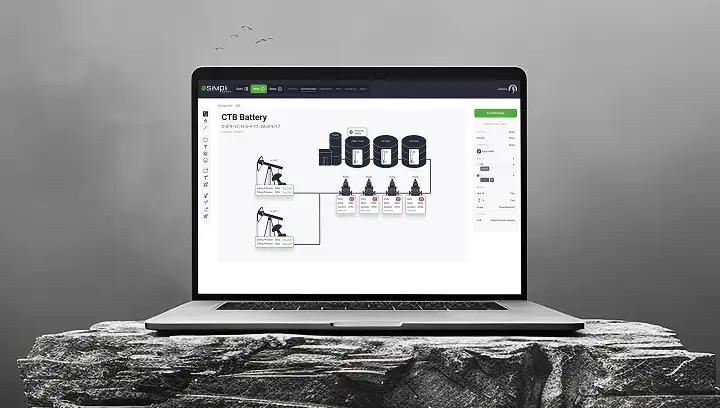
What you're building is industrial telemetry feeding a model that has to be trusted by people carrying safety accountability. Our SimpliSCADA project gives a fair picture of what monitoring and control work looks like in practice, and the same constraints run through manufacturing software builds.
How it's priced: annual enterprise licence per site, or monitoring as a managed service
Startup cost: substantial, plus a reference site you're allowed to name
Time to first revenue: twelve to twenty-four months
Hardest part: safety-critical systems need validation evidence, and vendor approval at a major miner can take a year out of your life.
8. Legal document review and matter automation
Contract review and discovery triage, plus the precedent drafting that eats junior time. Mid-tier and boutique firms want this and have nobody internal to build it.
The Federal Court published its Use of Generative Artificial Intelligence Practice Note on 16 April 2026, which has done you a favour. It applies to everyone who appears before the Court or files documents with it, expects users to understand what these tools can and can't do, and requires disclosure of AI use where the Court asks for it. Firms now have to have a position rather than pretending nobody was already using these tools. The capability underneath is natural language processing applied to long structured documents, well away from anything that looks like a chatbot.
How it's priced: per-lawyer monthly subscription, or per-matter
Startup cost: substantial
Time to first revenue: six to twelve months
Hardest part: confidentiality and privilege. The practice note is explicit that material put into a generally accessible tool may end up somewhere you didn't intend, and firms have read it. Build for local or private hosting from day one, because their professional indemnity insurer will ask.
9. Tender, grant and government bid support
Australian tender responses are long, repetitive and near-identical in structure from one submission to the next. A consultant with a decent answer library and AI assistance can put out three bids in the time one used to take.
Cheapest idea here to start, and the only one where you can charge money before you've built anything at all.
How it's priced: per-bid fee, or a monthly retainer
Startup cost: low
Time to first revenue: weeks
Hardest part: you get judged on win rate, so pick two sectors you actually understand and knock back the bids you can't win.
10. Ecommerce customer service and merchandising agents
Order status and returns, plus the endless where-is-it questions. Every online retailer of any size has the same queue, as anyone who's worked on retail and ecommerce platforms will tell you.
Being straight with you, this is the most crowded idea on the list and it's where a lot of new AI businesses go to lose. If you take it on, win on local depth. Australia Post and courier tracking, Afterpay and Zip, the platforms Australian retailers actually run on, and someone who answers the phone in business hours here rather than at 3am from another timezone.
How it's priced: monthly subscription tiered by ticket volume
Startup cost: moderate
Time to first revenue: three to six months
Hardest part: differentiation, because everyone's claiming the same thing.
Two worth reading before you commit: our guide to AI in ecommerce for where retailers are seeing returns, and the cost and feature breakdown for AI chatbot development so you price against reality.
11. Insurance claims triage and climate risk analytics
Flood, storm and bushfire events produce claim surges that break manual triage inside a week. Property-level risk modelling sells to the same buyer, so one relationship gets you two products.
How it's priced: enterprise contracts, sometimes with a per-claim component
Startup cost: substantial
Time to first revenue: twelve to twenty-four months
Hardest part: getting claims data to build on before you have a customer. The December disclosure obligation also lands squarely on this use case, so build the audit trail in from the start.
12. Recruitment screening with compliance built in
Employment decisions are among the clearest examples of decisions that significantly affect someone, which puts screening tools directly inside the new transparency obligation.
Most vendors will treat that as a burden. Treat it as the product. A demonstrable bias-testing record and a disclosure-ready audit trail is worth more to a high-volume employer right now than another matching algorithm. The National AI Centre's Guidance for AI Adoption gives you a testing and monitoring framework to build that record against.
How it's priced: subscription plus per-role fees
Startup cost: substantial
Time to first revenue: six to twelve months
Hardest part: you have to show your testing rather than describe it.
13. Property and strata management automation
Maintenance requests and owner reporting, with tenant communication running underneath both. Predictable structure and endless volume, which is what you want.
Timing helps more than usual here. In January 2026 the OAIC ran its first ever privacy compliance sweep, reviewing around sixty organisations across six sectors, with real estate agents collecting details at open homes named as a target. Non-compliant privacy policies carry penalties of up to $66,000. Add the AML/CTF changes from 1 July 2026 and tenant screening sitting inside the automated decision-making rules, and agencies are far more willing to have this conversation than they were a year ago.
How it's priced: per-agency or per-property subscription
Startup cost: moderate to substantial
Time to first revenue: six to twelve months
Hardest part: a fragmented buyer market where every agency runs a different trust accounting and CRM stack.
14. RTO and education compliance support
ASQA audit preparation and assessment validation chew through administrative hours that don't scale with enrolment revenue. Registered training organisations feel it acutely and have thin margins to fix it with. The same pressure runs through the wider EdTech sector, where student support enquiries are the other obvious target.
How it's priced: annual licence per campus or per RTO
Startup cost: substantial
Time to first revenue: nine to fifteen months
Hardest part: academic integrity nerves. Anything touching assessment gets picked over, so start with administration and earn your way toward the marking.
15. Fractional AI lead for SMEs
Remember the 19% who don't know where to start. This is the product for them.
A mid-sized business knows it needs a plan and can't justify a senior full-time hire to write one. You sell the roadmap, the governance framework, the vendor shortlist and the first implementation. The National AI Centre's six essential practices give you a credible framework that came from government rather than from you, which counts for a lot when you're new. Pair it with the starting points on the business.gov.au AI page and you've got a first deliverable before you've got a client.
How it's priced: fixed-fee assessment, then a monthly retainer
Startup cost: low
Time to first revenue: weeks
Hardest part: you're the product. Getting past your own calendar means hiring delivery people or productising the assessment, and most consultants never do either.
Bonus Idea
16. sell to the other fifteen
Every business above has the same silent dependency, and nobody puts it on a slide.
The model's usually fine. It's the data that's a shambles.
A fifteen-year-old Xero file with three spellings of the same supplier. Job notes buried in a shared inbox. Product descriptions that live in one person's head plus a spreadsheet nobody's opened since 2023. Customer records split across a CRM, a booking system and a Mailchimp list. Every AI project in this country hits that wall in week two and hardly any budget has a line for it.
So sell the wall.
Readiness assessment, cleaning, structuring and deduplication, plus the governance layer that works out what can lawfully go into a model in the first place. Under the Privacy Act that's a real question rather than a formality. You're selling picks and shovels to everyone building ideas 1 through 15, and to every mid-market business trying to do this internally.
Nobody puts this on a list of AI business ideas because it isn't exciting. It's also the one you could start on Monday, there's almost no competition in the SME segment, and it puts you in the room before the interesting project gets scoped. Half the time the client then asks you to build the interesting project.
How it's priced: fixed-fee assessment, then project work or a data operations retainer
Startup cost: low
Time to first revenue: weeks
Hardest part: selling it. "Fix your data" is a terrible pitch. Sell the outcome the client already wants, explain that this is step one, and price both together so the assessment never becomes a line item somebody can delete.
15 AI Business Ideas That Make Money in Australia

Four of the Fifteen are low-cost and pay within weeks. If capital's your constraint, start there and let services revenue fund the product build. Unfashionable route, and it works.
Where I'd be careful
Two warnings, because a list of sixteen good ideas isn't much use without them.
Ecommerce customer service is the one everybody picks, because it's the one everybody understands. Cheap for you to build and just as cheap for the next bloke, so you'll meet four competitors in every deal. Take it on only if you've got a real local advantage.
The heavy-capital plays are excellent businesses that have flattened a lot of founders. Agtech, predictive maintenance and claims analytics all mean twelve to twenty-four months before first revenue, which means funding, patience, and a named reference customer lined up before you start. If you're self-funding, these are your second business.
Which AI idea is actually worth your money?
There are plenty of AI ideas. Far fewer make good businesses. This interactive workbook helps you narrow the options, test the economics and decide whether to build, sell the service first, or walk away.
The bits nobody warns you about
Summer is a dead zone
Australian business goes quiet from about the second week of December and doesn't properly wake up until late January. That's six weeks with no decisions, no signatures and no new pipeline, every single year. If your runway calculation assumes twelve trading months, you've overstated it. Sign what you can before Christmas and use January to build.
You'll get paid late
Thirty-day terms mean forty-five in practice and sixty if you're dealing with a large corporate or a government department. Budget for it, invoice the day the work's done, and if you can get a deposit on project work, take it.
End of financial year is your friend
A lot of Australian businesses will spend in May and June that they wouldn't spend in September, because the deduction lands in the same year. Build your sales calendar around that rather than fighting it.
The break-even arithmetic
Unglamorous, and it decides whether you survive. The numbers below are invented to show the shape of it.
Take your monthly fixed costs. For a small AI business that's usually your own drawings, hosting, what you pay the AI provider every time someone uses your product, tooling, insurance and accounting. Divide that by the gross margin on one customer.
Say your fixed costs are ten thousand a month. A services model carries almost no marginal cost, so two retainers at five thousand each and you're square. Now say you're selling a subscription product where each account leaves you about eighty dollars once you've paid the AI provider and answered their support emails. Same ten thousand, and you need roughly 125 paying accounts. Signing two retainers takes a month. Getting to 125 accounts takes years.
Watch that AI provider bill closely, whichever route you take. It goes up with how much people use the product rather than with what they pay you, and a flat monthly price with a handful of heavy users is exactly how an AI product ends up with negative gross margin at the moment it starts looking successful. Price on outcomes, or cap usage, or do both. Getting the architecture and hosting decisions right early moves this number more than most founders expect.
Funding, and what actually applies to you
R&D Tax Incentive
Worth chasing if you're building something with real technical unknowns. Skip it if you're wiring existing tools together.
- Who: companies under $20 million aggregated turnover
- What you get: your corporate tax rate plus an 18.5 percentage point premium, landing at 43.5% for a company taxed at 25%, paid as cash rather than a reduction on a tax bill
- Minimum: $20,000 of qualifying spending
- Deadline: register your activities with AusIndustry within ten months of your income year end
- What kills a claim: no documented hypothesis, and no record of what you tested or what came back. Wiring an existing API into a website isn't R&D, and AusIndustry has run out of patience with claims that pretend otherwise
Reforms were announced in the 2026–27 Budget but aren't proposed to start until 1 July 2028. The ATO's program overview sets out the mechanics.
Industry Growth Program
Real money, and most applicants won't qualify. Check the two conditions before you spend a day on it.
- Who: SMEs under $20 million turnover
- What you get: matched grants, from tens of thousands for early-stage commercialisation up to several million for growth
- Condition one: complete the Advisory Service and hold an adviser report before you apply
- Condition two: your project sits inside a National Reconstruction Fund priority area, meaning resources, agriculture and fisheries, transport, medical science, renewables and low emissions, defence capability, or enabling capabilities
- Won't qualify: an AI consulting practice. Agtech, medtech and industrial AI often will
The program was paused to new applications at the time of writing, so check the business.gov.au program page before you build a plan around it.
AI Adopt Centres
Advice and training, not cash. Use them, but don't count on them to fund a build.
Widely reported as an SME cash grant, which they aren't. The competitive round funded organisations to set the centres up, and eligible SMEs in priority sectors use their services free of charge, including readiness assessments, training and implementation advice. The AI Adopt Program page lists them.
State programs
Every state runs something, all with different rules and open dates. Check yours alongside the federal options rather than instead of them.
The compliance clock
Australia has no AI Act, and it's worth understanding why, because plenty of vendors are selling readiness for legislation that doesn't exist.
Where things actually stand
The one that matters: 10 December 2026
Does it apply to me? You're covered if any of these are true.
- You turn over more than $3 million
- You hold health information, at any size. Assume yes if you're anywhere near healthcare
- You trade in personal information, at any size
- You're an AML/CTF reporting entity, which from 1 July 2026 covers real estate, conveyancing, accounting and law
What you have to do.
Where personal information feeds a program that makes or substantially helps make decisions significantly affecting someone's rights or interests, your privacy policy has to set out the kinds of information used and the kinds of decisions involved.
What it doesn't do.
There's no ban on automated decisions, and no new right for anyone to demand a human reviews theirs. It's a disclosure rule and nothing more.
Build that disclosure into your product documentation now and you're handing every customer something they need, which sells better than anything you could put on a feature list.
Then find out who regulates your buyer
Sector regulators are moving separately, and in places faster than the general framework.
Whichever industry you pick, work out who regulates your buyer before you find out the hard way.
What separates the ones that work
Three things, based on what we see across delivered projects.
1. Pick a problem someone already measures.
The difference is that someone already reports the second number to someone else every month. You're moving a figure that exists, not inventing one.
2. Write back into the system they already use.
A tool that lives in its own window gets opened for a fortnight and then forgotten. One that writes back into Salesforce, simPRO or Xero becomes part of how the work gets done. That's the difference between a chatbot and an agentic AI system that can actually finish a task.
3. Baseline the metric before you deploy anything.
Measure the week before you switch it on, not the month after. A customer who can't see the improvement won't renew, however good the thing actually is.
One we delivered. VT Digital built CRM systems integration and AI development for 28Watt, an energy efficiency company.
Robin Stam, CEO and Co-Founder, reported a 35% decrease in support ticket volume and better first-call resolution.
The gain came from connecting AI to the systems the support team already worked in, rather than handing them another tab to check. Same pattern shows up across our energy and utilities work, and the full review sits with the others on our testimonials page.
Thirty days to know if you've got something
Before you write code, register a company, or tell anyone you're doing this.
Days 1 to 5. Pick one industry you can reach. At this stage access beats market size by a distance.
Days 6 to 15. Talk to ten operators. Ask what they did most often last week, how long it took, and what they currently pay to avoid it. Don't pitch. The second you describe your idea they start being polite, and polite answers are worthless.
Days 16 to 20. Take whichever task came up most and put a monthly dollar figure on it for one business.
Days 21 to 25. Do that task by hand for one customer, using whatever off-the-shelf tools you like. Charge them for it.
Days 26 to 30. If they pay and ask for it again next month, you've got a business. Now automate whichever part hurt most, which is where a properly scoped MVP build earns its keep.
The founders who skip the manual step build the wrong product at impressive speed.
What it costs to get yourself set up
Registering the company is the cheap part. ASIC charges a few hundred dollars to register a proprietary company and a few hundred again each year for the annual review, indexed upward every 1 July. A business name costs a nominal amount on top. An ABN costs nothing, and a Director ID is free and has to be in place before you're appointed. The business.gov.au registration guide has the current fees and the order to do these in.
What catches people out is everything not on that list. Professional indemnity and cyber cover. A privacy policy that describes what your product does rather than a template you pulled off the internet. An accountant who's lodged an R&D claim before, not one who's read about it.
So which one should you pick?
Of the sixteen AI business ideas above, the split is roughly this. If you've got capital and technical depth, the subscription software ones carry the higher ceiling and the longer wait. If you've got industry access and not much money, ideas 1, 9, 15 and 16 pay inside a month and can fund everything after them.
The constraint is almost never the model. It's knowing which kitchen table to clear, and building something that plugs properly into the systems your customer already can't work without.
That's the work we do as an AI development company in Australia, with teams across Sydney, Melbourne, Brisbane and Perth. If you're still working out which of these sixteen suits you, an AI consulting conversation is a cheaper way to find out than building the wrong one.
🎧Which AI Business Ideas Can Actually Make Money in Australia?

Australia’s AI market is growing, but not every idea needs a large team, heavy funding, or a year of product development before it can generate revenue.
Some opportunities—such as AI compliance, tender support, fractional AI leadership, and data readiness—can start with low capital and bring in revenue within weeks. Others, including healthcare, agtech, predictive maintenance, and vertical SaaS, offer bigger long-term potential but require more investment and patience.
In this episode, we break down 16 realistic AI business ideas for Australia, including startup costs, time to first revenue, pricing models, funding options, compliance requirements, and how to validate an opportunity before you build it.
 Press play and listen.
Talk it through before you build the wrong one

Most of the money wasted on AI in this country goes on projects that got scoped before anyone checked whether the problem was worth solving. Fifteen minutes on the phone is usually enough to work out whether the idea you're circling has a buyer sitting behind it, and what standing it up would take.
You won't get a deck. And if the answer is that you should start with a services model and fund the product later, we'll say so.
Book a free 15-minute AI opportunity call · Or take the AI consulting route if you'd rather start with a written assessment.
Frequently Asked Questions (FAQs)
Which AI business idea is easiest to start in Australia with little money?
Compliance advisory, tender and bid support, fractional AI consulting and data readiness services all start cheap and can invoice within weeks. They run on industry knowledge rather than capital, and the services revenue can fund a product build later.
Do I need to register a company to start an AI business in Australia?
Not on day one, though most founders do before signing a real client. ASIC charges a few hundred dollars to register a proprietary company and a similar amount each year after, with fees indexed every 1 July. An ABN is free. Check business.gov.au for the current schedule before you budget.
Are there government grants for AI businesses in Australia?
The R&D Tax Incentive is the main one, paying eligible companies under $20 million turnover 43.5% of qualifying development spending back as cash. The Industry Growth Program offers matched grants but requires a National Reconstruction Fund priority area, and was paused to new applications at the time of writing.
What AI rules apply to my business in Australia right now?
There’s no Australian AI Act. Existing law applies, including the Privacy Act and Australian Consumer Law. From 10 December 2026, organisations covered by the Privacy Act have to disclose automated decision-making that significantly affects people in their privacy policy.
How much does it cost to build an AI product in Australia?
It depends far more on how many systems it has to talk to and how regulated the buyer is than on the AI itself. Anything sold into healthcare, mining or financial services costs multiples of the same idea sold to a small agency. Our AI development cost guide breaks down real project budgets.


Senior Technical Project Manager
Dushyant Takhar is a Web App Development Expert, passionate about building robust and scalable applications. His focus is on creating innovative solutions that streamline business processes and set companies up for long-term digital success.