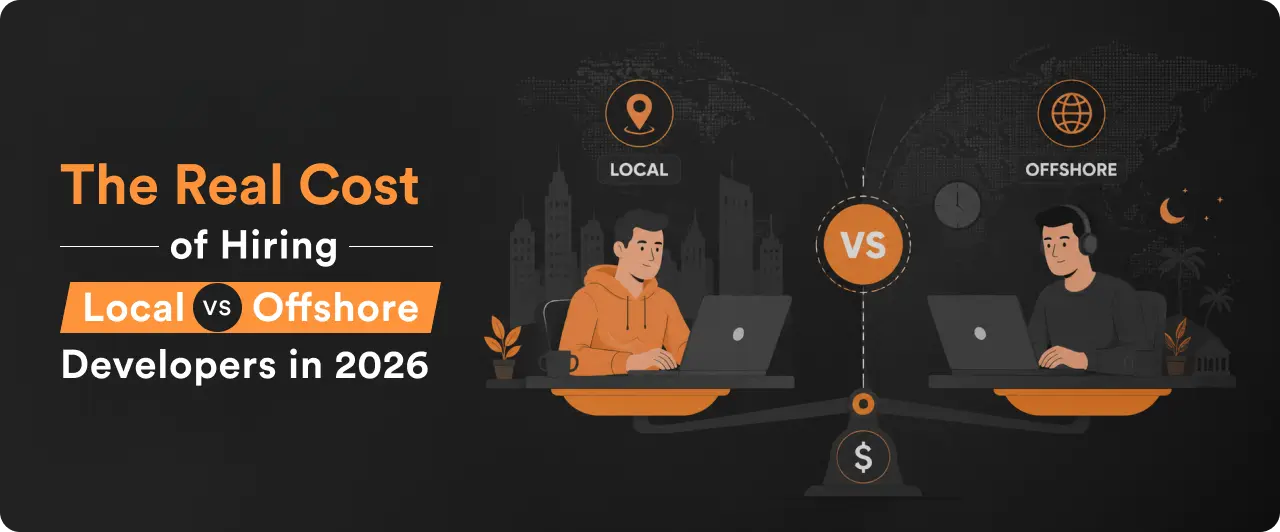
Hiring developers used to feel more straightforward. You’d either build a local team or outsource offshore if budgets were tight. Now it’s a bit messier than that. Australian businesses are dealing with rising tech salaries, ongoing skill shortages, and pressure to move faster without blowing budgets.
That’s why the conversation around offshore vs local developers keeps growing. The tricky part is that when you hire developers in Australia, hourly rates rarely tell the full story. A developer who looks cheaper upfront can sometimes end up costing more long-term.
On the other hand, hiring locally isn’t always as expensive as people assume once productivity and communication are factored in. The real question in 2026 is less about “cheap vs expensive” and more about overall value.
Why Businesses Are Reconsidering Hiring Models in 2026?
A few years ago, many Australian companies preferred to keep development fully local. It felt safer and easier to manage. That mindset has shifted quite a bit. Remote work became normal. Offshore collaboration tools improved. Businesses also realised that finding senior talent locally can take months, especially for specialised roles.
At the same time, the software developer cost in Australia has continued to rise. For growing businesses, this creates a difficult balance between hiring quality people and staying within budget. That’s why more companies now mix different hiring models instead of sticking to one approach.
The Real Cost of Hiring Local Developers in Australia
Base Salary Isn’t the Full Cost
Once you factor in superannuation, leave entitlements, equipment, recruitment costs, and onboarding time, the actual number climbs pretty quickly.
Superannuation and Employee Benefits
The 12% Superannuation Guarantee also adds another layer to the overall employment cost in 2026. Businesses that budget only on salary figures often underestimate this part.
Recruitment and Retention Costs
And then there’s hiring itself. Finding experienced developers locally isn’t always easy. Recruitment cycles can drag on for weeks or months. If the wrong hire happens, replacing them costs even more time and money. Still, local hiring does bring advantages that are difficult to ignore.
Productivity and Communication Advantages
Communication tends to move faster. Meetings happen during the same working hours. Teams collaborate more naturally, especially on projects where requirements change often.That speed can sometimes offset the higher salary cost entirely.
For businesses handling sensitive customer data or complex workflows, hiring local developers in Australia also reduces a lot of operational friction.
The Real Cost of Offshore Development
Lower Hourly Rates
Offshore development usually gets attention because of lower hourly rates. And yes, the savings can be significant. For startups or businesses trying to scale quickly, offshore software development Australia models can make projects financially possible when local hiring simply isn’t realistic.
Hidden Offshore Costs
But the cheaper rate doesn’t always reflect the total cost. Timezone gaps can slow communication down more than expected. A small misunderstanding in requirements might take days to fully resolve instead of hours. Project management also becomes more important. Without clear systems and documentation, offshore projects can drift pretty quickly.
Variability in Quality.
Some offshore teams are excellent. Others look affordable initially but create rework later that ends up costing more than expected. That’s usually where businesses feel frustrated. Not because offshore development failed completely, but because the hidden management overhead wasn’t planned for.
Security and Compliance Risks
Security and compliance also deserve attention, especially for Australian businesses dealing with regulated industries or customer data. Your vendors must know and understand the local regulations.
Quick Comparison: Local vs Offshore Developers

How to Decide What’s Right for Your Business?
There isn’t really one perfect answer here.
Some businesses genuinely benefit from local teams. Others operate perfectly well with offshore developers. A lot now sit somewhere in the middle.
Choose Local If
- Collaboration speed matters
- You handle sensitive data
- You need close integration with internal teams
Choose Offshore If
- Budget flexibility is critical
- You need rapid scaling
- The project is clearly structured and manageable remotely
Hybrid Models Are Growing
- Many businesses now combine local leadership with offshore execution
- Balance between cost and control
Keep strategy, leadership, and project management local while using offshore teams for development execution.
🎧The Real Cost of Hiring Developers in 2026: Local vs Offshore

Hiring developers in 2026 is no longer just a budget decision. Australian businesses now have to weigh salary costs against productivity, communication speed, hiring timelines, and long-term operational value. While offshore teams can reduce upfront costs, hidden overhead in management, quality control, and collaboration can quickly affect outcomes if not planned properly.
In this episode, we break down the true cost of local vs offshore hiring, where businesses save, where they lose, and how hybrid hiring models are becoming the smarter path forward.
Wrapping it up

The decision to hire software developers in Australia or offshore developers isn’t just about comparing hourly rates anymore. It’s about understanding the full picture. Communication, productivity, management overhead, hiring speed, compliance, and long-term stability. All of it matters. The businesses making smarter hiring decisions in 2026 are usually the ones looking beyond short-term cost and focusing on total ownership value instead.
Frequently Asked Questions (FAQs)
It includes salary, superannuation, employee benefits, recruitment costs, onboarding, and operational overhead.
Offshore teams can reduce upfront development costs significantly, depending on the region and project structure.
Superannuation, leave entitlements, recruitment expenses, and retention costs are often overlooked.
India, the Philippines, Vietnam, and Eastern Europe are commonly used based on budget and technical requirements.
It increases the total employment cost beyond the developer’s base salary.