Privacy rules in Australia are changing again, and this time the impact on SaaS businesses is going to be hard to ignore. For years, a lot of companies treated privacy compliance as something basic. But now, with the Privacy Act 1988 Amendments, updating the privacy policy once in a while is becoming risky.
The Australian Privacy Act reforms of 2026 are pushing businesses toward stronger accountability, especially those handling customer data at scale. And for SaaS companies, that’s pretty much the entire business model.
The challenge isn’t just understanding the reforms. It’s figuring out what actually needs to change internally before these expectations become stricter.
Why the 2026 Privacy Reforms Matter for SaaS Businesses?
SaaS businesses collect a huge amount of data. Customer details, usage behaviour, payment information, analytics, sometimes even sensitive data depending on the platform. That’s exactly why regulators are paying closer attention.
The Privacy Act 1988 Amendments are designed to increase transparency, improve consumer protections, and place more responsibility on businesses handling personal information. For SaaS companies, this isn’t just a legal issue anymore. It’s operational.
Customers are also becoming more aware of how their data is used. Businesses that ignore privacy concerns now risk more than fines. They risk losing trust.
Key Changes Under the Privacy Act 1988 Amendments
Stronger Consent and Data Collection Rules
Businesses must be clearer about what data they collect. You also need to state the reason of data collection. Long policies with vauge wording won’t really work anymore. Users must understand what they’re agreeing to. Otherwise that becomes a problem. A lot of SaaS platforms will probably need to simplify how consent is handled.
Automated Decision-Making Transparency
This is one of the bigger shifts. If your platform uses AI, automation, recommendation systems, or decision-making tools, users may need clearer explanations about how those systems work. That doesn’t mean exposing your entire algorithm. But transparency expectations are definitely increasing.
Mandatory Privacy Impact Assessments (PIAs)
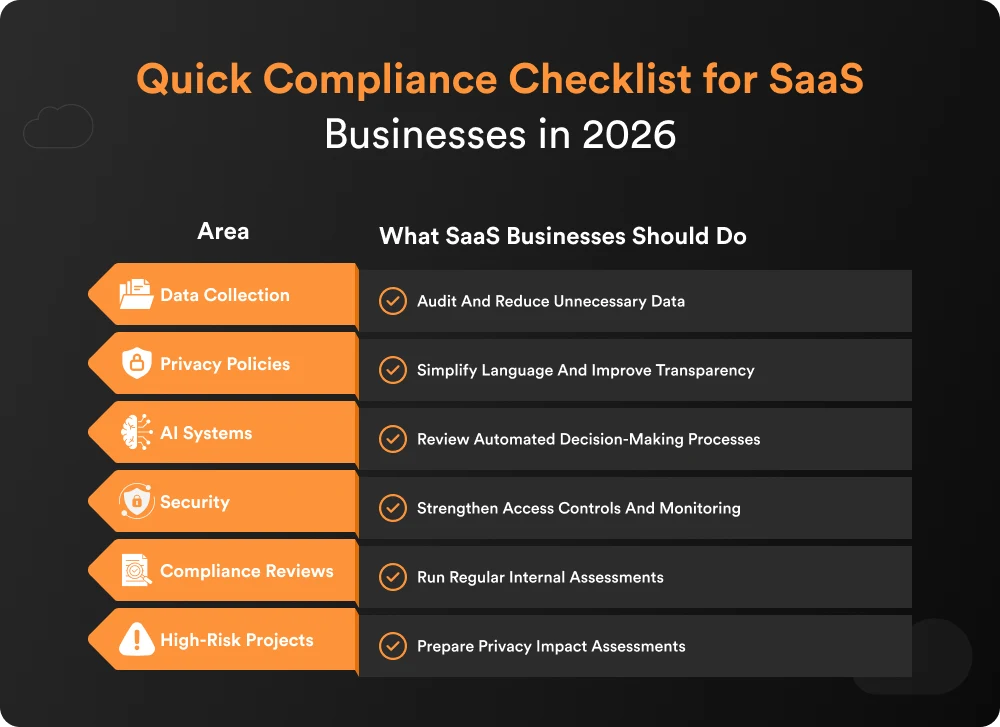
Some projects may now require formal privacy assessments before launch. This becomes more relevant for platforms handling sensitive information, healthcare data, financial data, or large-scale automation. For many SaaS teams, privacy reviews may need to happen much earlier in development.
New Statutory Tort for Serious Invasion of Privacy
Another area of reform is serious privacy breaches. New updates introduce stronger legal rights. Mishandling of personal data will have stronger grounds for legal action. New updates aim to protect consumer data rights. Non-compliance increases your financial and reputational risk.
Higher Penalties for Non-Compliance
Regulators are now moving toward stricter enforcement of the policies. Businesses that delay Privacy Act Compliance in Australia or ignore privacy obligations altogether will be under the radar. Penalties are becoming much more serious than before.
What SaaS Companies Should Do Right Now?
Review Data Collection Practices
A lot of businesses collect more data than they actually need. Now is probably the time to audit what’s being stored, where it’s going, and whether it’s necessary in the first place. Less unnecessary data usually means less risk.
Update Privacy Policies
Most privacy policies were written more for legal protection than readability. That’s changing. The Australian Privacy Principles 2026 are pushing businesses toward clearer communication and more transparent disclosures. If customers can’t understand your policy, it probably needs work.
Improve Internal Data Governance
Privacy compliance in Australia is no longer just a legal department responsibility. Security controls, employee access, internal processes, and documentation. All of it matters now. Weak internal handling creates compliance gaps very quickly.
Assess AI and Automated Systems
This catches a lot of SaaS businesses off guard. Recommendation engines, automated approvals, and AI-generated outputs. These systems may fall under new transparency expectations. It’s worth identifying where automation is already influencing customer outcomes.
Prepare for Ongoing Compliance
This part matters most. SaaS privacy compliance in Australia isn’t becoming a one-time checklist anymore. It’s becoming an ongoing process. The businesses that treat compliance as continuous usually adapt faster when regulations evolve again.
Quick Compliance Checklist for 2026
🎧Is Your SaaS Ready for Australia’s New Privacy Rules?

Privacy compliance is becoming more demanding for Australian SaaS businesses, with stricter expectations around consent, data usage, and automated decision-making.
These reforms go beyond legal updates—they directly impact how SaaS platforms collect, process, and protect customer information every day.
In this episode, we break down what’s changing, where SaaS companies may be exposed, and the practical steps needed to stay compliant and build customer trust.
Wrapping it up
The Australian Privacy Act reforms 2026 are going to affect a lot of SaaS businesses, even smaller ones that assume these rules only apply to large enterprises. Waiting until enforcement becomes stricter probably isn’t the best strategy. The companies preparing early will have a much easier time adapting, avoiding risk, and building long-term trust with customers.
Frequently Asked Questions (FAQs)
The reforms include stronger consent rules, AI transparency obligations, mandatory assessments for some projects, and higher penalties for non-compliance.
These obligations are expected to roll out as part of the staged 2026 reforms and related regulatory updates.
It is a proposed legal right allowing individuals to take action against serious privacy breaches.
Yes, especially if they handle sensitive data, digital services, or large amounts of customer information.
They are expected to apply to higher-risk projects involving sensitive data or large-scale automated processing.