Australia’s app market moves fast, and most businesses know it. Mobile investment is up across the board, small players included. But one question tends to get lost before the design meetings even start — what language is the thing actually going to be built in?
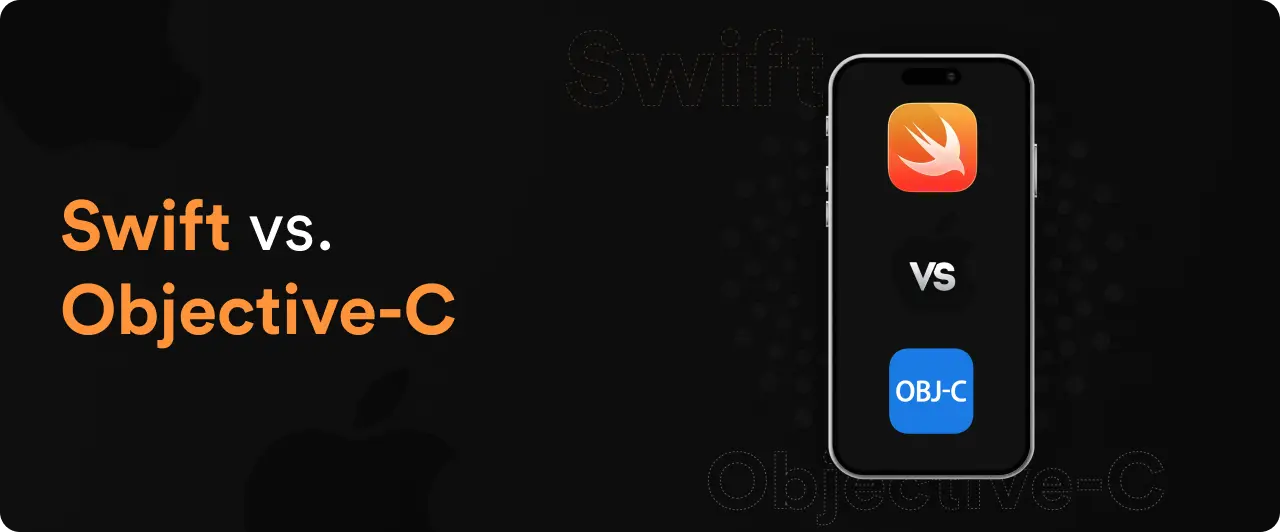
Swift vs Objective-C. Sounds like an argument for the devs to sort out. It isn’t. That call affects your timeline, your budget, and whether the app still works properly in three years.
At VT Digital, a mobile app development company in Sydney, it’s one of the first conversations we have with clients. Because getting it wrong early is expensive. And today’s blog will help you make a better decision.
Understanding the Basics
What is Swift?
Swift landed in 2014. Apple built it to fix a lot of what made iOS development slower and more error-prone. The syntax is clean. The safety features are real, and it’s genuinely faster to write. For anything new, it’s the starting point.
What is Objective-C?
Objective-C has been around since before most smartphones existed. Decades of production use. Still powering large, stable apps. It’s not broken — it’s just aged, and the world around it has largely moved forward without it.
Swift vs Objective-C: Key Differences

Swift’s performance edge has grown over time — not shrunk. Especially for anything with complex UI or real-time data, the gap matters.
When Should You Choose Swift?
For most projects? Swift. That’s the short answer.
It builds faster, attracts more developers, and sits squarely in Apple’s long-term roadmap. An iOS app development company working on new builds today, Swift is the default choice.
Choose Swift when:
- You’re starting fresh, no legacy code involved
- Speed to market is on the table
- The app needs to grow, change, or scale after launch
- You want code that’s actually maintainable two years from now
The longer you plan to run and update this app, the more Swift pays off.
When Should You Choose Objective-C?
Depends on the situation. If you’ve got an Objective-C app that works, there’s no reason to rewrite it in Swift. That’s a real time and money commitment. And you’re taking on risk for a codebase that isn’t broken.
Objective-C holds up when:
- The project is maintenance or feature addition, not a rebuild
- Older third-party libraries are deeply embedded and haven’t moved to Swift
- Migration costs don’t justify the technical upside right now
It’s a niche choice. Not a bad one — just a specific one.
Cost and Development Impact
Swift tends to cost less upfront. Cleaner code, faster builds, fewer bugs making it through to QA. Those savings add up across a project.
Objective-C runs longer. The syntax demands more effort, finding experienced developers gets harder every year. Plus, maintenance costs climb as the codebase ages. For a new build, it’s hard to justify.
A good mobile app development company in Sydney won’t just quote you a number — they’ll map your language choice to your actual budget and timeline before any code gets written. That conversation matters.
Can Swift and Objective-C Work Together?
Old Objective-C app? No need to throw it out. Move one module to Swift. Leave what works alone. Ship in the meantime. A full rewrite stops everything — this doesn’t.
🎙️Swift vs Objective-C: Which One Should You Use for Your iOS App?

Choosing the right programming language is one of the most important decisions when building an iOS app. In this episode, we break down the real differences between Swift and Objective-C — from performance and development speed to maintenance and long-term scalability. Whether you’re launching a new app or updating an existing one, this discussion will help you understand which tech stack is the smarter choice for modern iOS development.
Conclusion
Swift is where most new iOS projects start in 2026. It’s faster to write, better supported by Apple, and the talent pool has shifted decisively in its direction. Objective-C isn’t dead — plenty of teams are still running it in production — but nobody’s starting fresh with it unless they have a specific reason to. If your app is greenfield, Swift is the obvious call. If you’re maintaining something older, the answer gets murkier and usually more expensive.
Frequently Asked Questions (FAQs)
Swift. No real debate there. For new projects, Objective-C takes more time to develop since the coding is more detailed. It’s a legacy framework with a shrinking talent pool.
Yes. Swift’s compiler and memory handling beat Objective-C’s older runtime. That gap has grown over time. In performance-heavy apps, you feel it.
Swift is modern. It catches errors early, before they cause real problems. Objective-C is older and more verbose. Still works. Just better suited to maintaining existing apps than starting new ones.
Swift usually costs less. Faster to build and fewer bugs. It’s also easier to maintain. Objective-C pushes costs up over time. The developer pool is shrinking. Older codebases get harder to manage. Both of those things add up.
Yes. Apple designed them to be interoperable. It’s a practical path for businesses modernising legacy apps gradually, letting teams migrate section by section rather than committing to a full, disruptive rewrite.