Customer experience has become one of the most difficult to get right for businesses. The Australian customers demand speed, relevancy, and continuity, yet most organisations are merely sewing together instruments that were not intended to operate together.
Automation helped for a while. Chatbots reduced call volumes. Workflows removed manual steps. But as customer journeys became more complex, these solutions started showing cracks. Scripted responses feel rigid. Context gets lost. Customers end up repeating themselves.
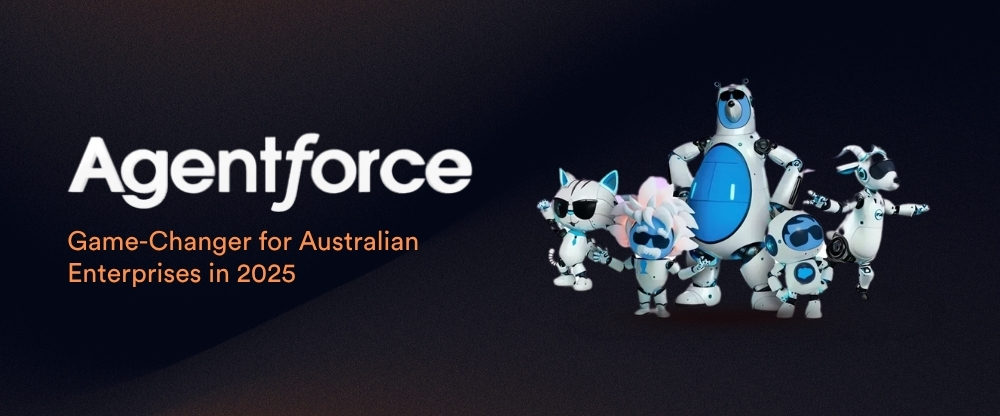
Agentic AI is emerging as a response to this gap. Not as another chatbot, but as a way for systems to act with intent. Salesforce consulting services help to make decisions, coordinate actions, and move customer journeys forward easily with Agentic AIs.
Why Customer Experience Needs a Smarter Approach?
Most customer experience problems don’t come from a lack of effort. They come from fragmentation.
Sales teams use one system. Support teams use another. Marketing runs campaigns based on partial data. Even when everything sits inside a CRM, the experience often feels disconnected because the systems don’t “think” together.
Traditional automation reacts to triggers. If X happens, do Y. That works for simple tasks, but real customer interactions rarely follow predictable paths. People change channels. Priorities shift. Urgency isn’t always obvious from a form submission.
Agentic AI approaches this differently. Instead of responding to isolated events, it works toward outcomes—resolving an issue, closing a loop, or helping a customer move forward—while navigating multiple systems behind the scenes.
What Is Agentic AI (Without the Jargon)?
Agentic AI refers to AI systems that can operate with a degree of independence. They don’t just generate responses. They assess context, decide what needs to happen next, and take action to achieve a goal.
That’s the key difference.
Rule-based automation follows instructions. Generative AI responds to prompts. Agentic AI connects the dots and acts.
For customer-facing teams, this matters because it mirrors how people actually work. Support agents don’t just answer questions—they investigate, prioritise, escalate, and follow through. Agentic AI is designed to support that kind of flow.
How Businesses Are Actually Using Agentic AI Today
Personalisation That Goes Beyond First Names
The majority of personalisation ends with the surface level. Agentic AI looks deeper. It takes into consideration behaviour, previous choices, the present situation, and timing in order to form relevant interactions, rather than forced ones.
This shows up in smarter suggestions, improved follow-ups, and discussions that are in line with where the customer really is in the buyer journey and not where a campaign presumes the customer should be.
Support That Feels Joined-Up, Not Scripted
In customer support, agentic AI helps teams focus on resolution rather than administration. It can prioritise cases, suggest likely causes, and recommend next steps based on similar issues.
Importantly, it doesn’t replace human judgment. It supports it. Agents stay in control, but they’re no longer starting from scratch with every case.
More Effective Sales and Account Management
Sales teams often lose time updating CRMs instead of using them. Agentic AI helps close that gap by automating updates, flagging opportunities, and prompting follow-ups when they actually matter.
For organisations investing in Salesforce consulting services, this is where AI starts delivering real value—by improving adoption and making Sales Cloud work the way teams expect it to.
Consistency Across Channels
Few things frustrate customers more than having to repeat the same information. Agentic AI helps maintain context as customers move between chat, email, phone, and portals.
For Australian businesses in professional services, healthcare, and enterprise B2B, this consistency often matters more than speed alone.
Catching Problems Before They Escalate
Agentic AI is also being used to spot issues early. A drop in engagement. Repeated searches. Delayed responses. On their own, these signals mean little. Together, they can point to dissatisfaction.
Early intervention reduces churn and prevents small issues from becoming costly ones.
Reducing Internal Bottlenecks
Behind the scenes, agentic AI helps coordinate work across teams. Instead of manual handoffs and follow-ups, tasks move automatically between sales, service, and marketing.
Customers don’t see this complexity—but they feel the results through faster outcomes and clearer communication.
Improving Customer Journeys Over Time
Rather than relying on static journey maps, businesses use agentic AI to see where customers stall or drop off and adjust in real time. Journeys become something that evolves, not something reviewed once a year.
Supporting Teams With the Right Information
Agentic AI also strengthens knowledge management by surfacing relevant information when teams need it. This reduces reliance on rigid scripts and helps newer team members deliver confident, accurate responses.
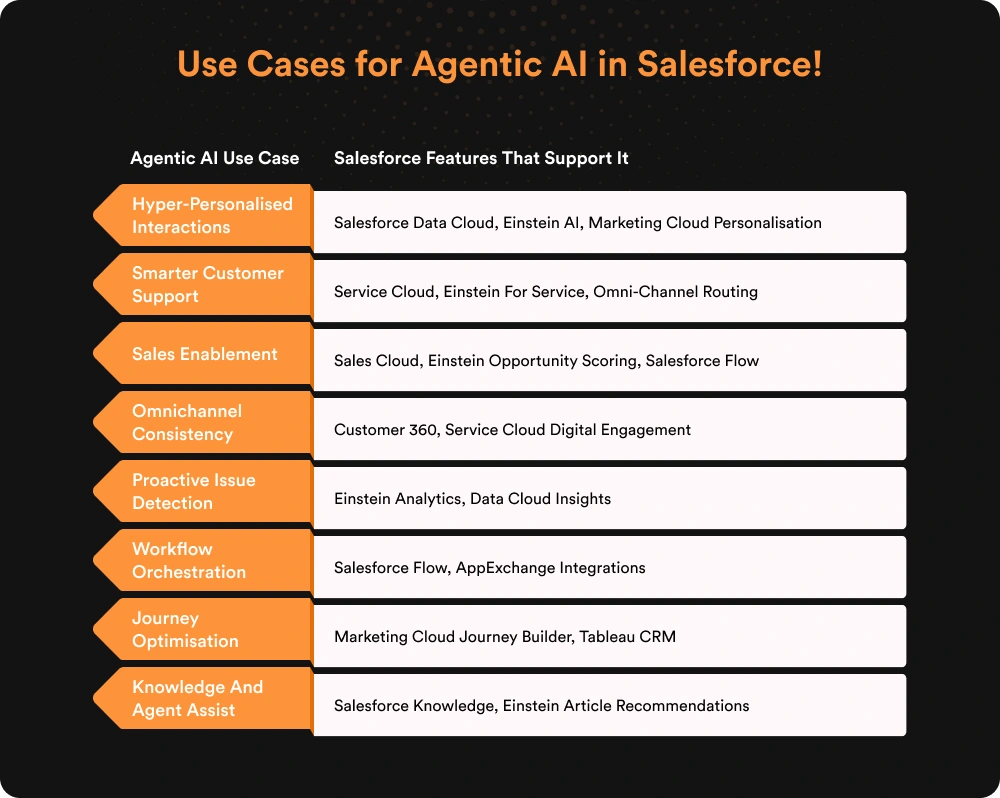
Top Use Cases for Agentic AI in Salesforce!
Why Salesforce Is Central to Agentic AI
Agentic AI needs context to work well. Salesforce provides that context.
As the system of record for customer data, Salesforce gives AI agents access to real-time insights across sales, service, and marketing. This allows actions to be triggered intelligently, not blindly.
For businesses working with a Salesforce consultant in Sydney, the focus is less on adding new tools and more on making existing platforms work together in smarter ways.
What Businesses Need to Get Right First?
Agentic AI isn’t a plug-and-play solution. Data quality matters. Integration matters. So does governance.
Clear boundaries, transparency, and human oversight ensure AI supports teams rather than creating new risks. The strongest results come when AI is treated as part of a broader customer experience strategy—not a shortcut.
🎙️Why Businesses Are Turning to Agentic AI for Better CX

From fragmented tools to joined-up journeys, agentic AI changes how teams work with customers. This episode explains real-world use cases that go beyond chatbots and scripted automation.
Talk To Agentic AI Experts
Agentic AI offers a way to bring intelligence and intent back into customer journeys. When paired with platforms like Salesforce, you can try AI capabilities in practical, customer-first outcomes.
When paired with platforms like Salesforce, these AI capabilities translate into practical, customer-first outcomes from smarter lead nurturing and real-time decision-making to seamless service workflows and predictive insights. The result is faster responses, higher satisfaction, and journeys that truly adapt to each customer’s needs.
Whether you’re exploring AI-driven sales, service, or marketing transformations, we help you turn innovation into measurable impact.
Have questions or want to explore how Agentic AI can work for your business?
Chat with us today and let’s design intelligent customer experiences that drive real results.
Frequently Asked Questions
Agentic AI uses autonomous, context-aware systems to move customer interactions forward. It reduces friction by maintaining continuity, prioritising actions, and supporting better decisions across systems.
They combine customer data, behaviour, and CRM insights to tailor interactions across channels. Platforms like Salesforce make this possible at scale without losing control.