If there’s one thing Australian businesses have learned over the last few years, it’s this: mobile apps are no longer “nice to have.” They’re the front door. It’s the interface that connects customers, staff, and/or partners.
The year 2026 also brings a great shift in mobile app development in Australia. Businesses want apps that solve real problems, scale smoothly, and remain relevant for years to come. They are developing practical and outcome-driven apps.
And to meet these demands, innovative mobile app development trends are taking shape. So what are these trends? Let’s break it down.
Many companies are hiring the best mobile app development company in Sydney to implement these trends and stay ahead in the market.
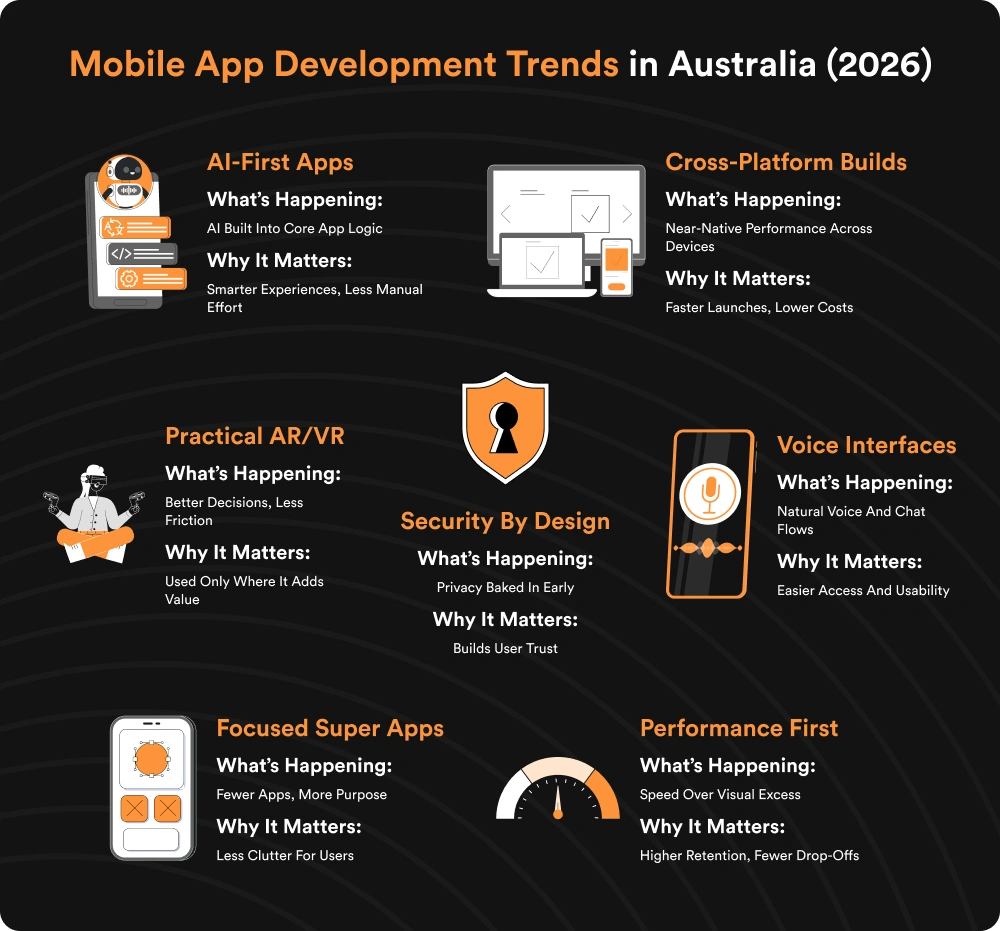
7 Mobile App Development Trends That Australian Businesses Should Know in 2026
1. AI Moves From Feature to Foundation
AI isn’t new, but how it’s being used is.
In 2026, Australian apps aren’t just adding AI. They’re being built around it. From smart onboarding flows to predictive search, AI is quietly shaping how apps behave behind the scenes.
Retail apps are adjusting recommendations based on live behaviour. Finance apps are using AI-based detectors to flag unusual activity before users notice
For any serious mobile app development company in Australia, AI is no longer a “premium extra.” It’s becoming part of the base architecture.
And importantly, Australian users expect it to feel helpful. Transparency, explainability, and data protection matter here more than flashiness.
2. Cross-Platform Development Gets Smarter
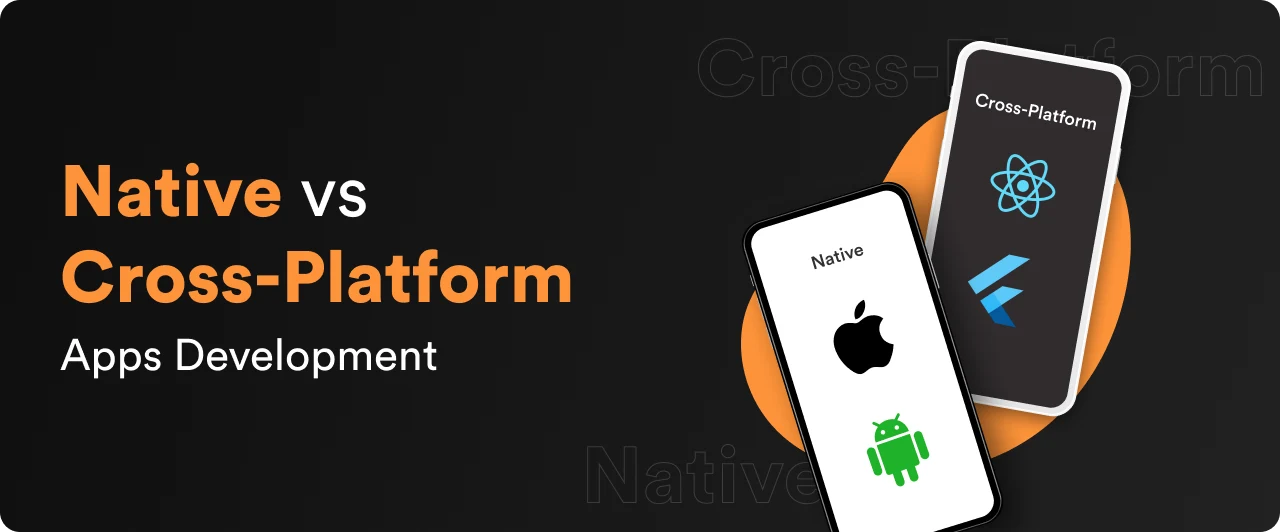
Australian businesses don’t want separate iOS and Android roadmaps anymore. It’s expensive. It’s slow. And it often leads to inconsistent experiences.
Many businesses are rapidly turning to cross-platform frameworks Flutter and React Native. These frameworks make app development affordable and time-efficient.
For startups and enterprises alike, this is a big win. A good mobile app development company in Sydney will now advise on cross-platform first and then go native only when it truly makes sense.
3. AR and VR Finally Find Practical Use Cases
For years, AR and VR felt like a “wait and see” technology in Australia. In 2026, that wait is mostly over.
The shift? Real use cases. Retail apps using AR for product previews. Property apps offering virtual walkthroughs through AR layout. Training apps are simulating real-world scenarios.
This isn’t about flashy demos anymore. It’s about reducing friction, shortening decision cycles, and improving understanding. The key trend here is restraint. Successful AR/VR apps don’t overdo it. They use immersive tech where it actually adds value.
4. Security and Privacy Shape App Design
Australian users are paying attention to data. So are regulators. As a result, security is no longer something bolted on late in development. In 2026, it influences how apps are designed from day one.
We’re seeing more local data hosting decisions. Companies are investing in developing stronger authentication without a clunky UX. Any mobile app development company Australia trusts will now talk about security early and often, not as fear-driven messaging, but as part of building confidence with users.
5. Voice and Conversational Interfaces Grow Quietly
Voice interfaces aren’t just replacing touch screens. They’re smoothly slipping into everyday workflows.
Think:
- Voice-enabled search inside apps
- Hands-free commands for field workers
- Conversational bots that don’t feel robotic
In Australia, this trend is especially relevant for accessibility and regional users. Voice interactions help apps reach broader audiences without overcomplicating the interface.
By 2026, conversational UX will be continuously working in the background.
6. Super Apps (Without the Hype)
Australia isn’t racing to build the next WeChat. But businesses are consolidating features.
Instead of launching five separate apps, companies are expanding core apps with modular features. They’re integrating payments, support, and tracking in one place. The reason? Reducing app fatigue for users.
This “quiet super app” trend is about focus, not bloat. Successful apps do more, but only where it makes sense.
7. Performance Matters More Than Polish
Here’s a hard truth: Australian users are unforgiving when apps are slow.
In 2026, performance dictates a brand’s reputation and value. Apps that load fast, respond smoothly, and work well on mid-range devices win trust quickly.
This is pushing development teams to:
- Optimise backend architecture
- Reduce unnecessary animations
- Test apps in real-world network conditions
A visually stunning app that stutters? Deleted. No second chances.
Mobile App Development Trends in Australia (2026)
🎙️ Key Mobile App Development Trends for 2026

What’s actually changing in mobile app development across Australia this year? In this episode, we break down seven key trends, from AI becoming foundational to security shaping app design from day one. Tune in to understand how modern apps are being built to solve real problems and scale smoothly.
Start Implementing These Trends Today!

Mobile app development in Australia isn’t about chasing trends. It’s about staying relevant. Lead the market by creating apps that feel intuitive, trustworthy, and quietly powerful. Work with a mobile app development company in Australia like VT Digital. VT Digital have worked with several SMBs and enterprise-grade organizations delivering feature-rich, lean and powerful app solutions!
Frequently Asked Questions (FAQs)
The top two trends are AI-led experiences and smarter cross-platform development. Fashion, real estate, and home & furnishing companies are also focusing on practical AR/VR use cases. Stronger security by design and performance-first architecture are now non-negotiable.
AR and VR are becoming tools for clarity rather than novelty—helping users visualise products, spaces, and scenarios more effectively within apps.
Many innovation-led fintech, healthtech, and retail firms are driving AI adoption. They’re now partnering with experienced mobile app development companies in Australia to build scalable solutions.
Look for teams with proven cross-platform experience, a strong understanding of performance optimisation, and the ability to advise when native development is still the better option.