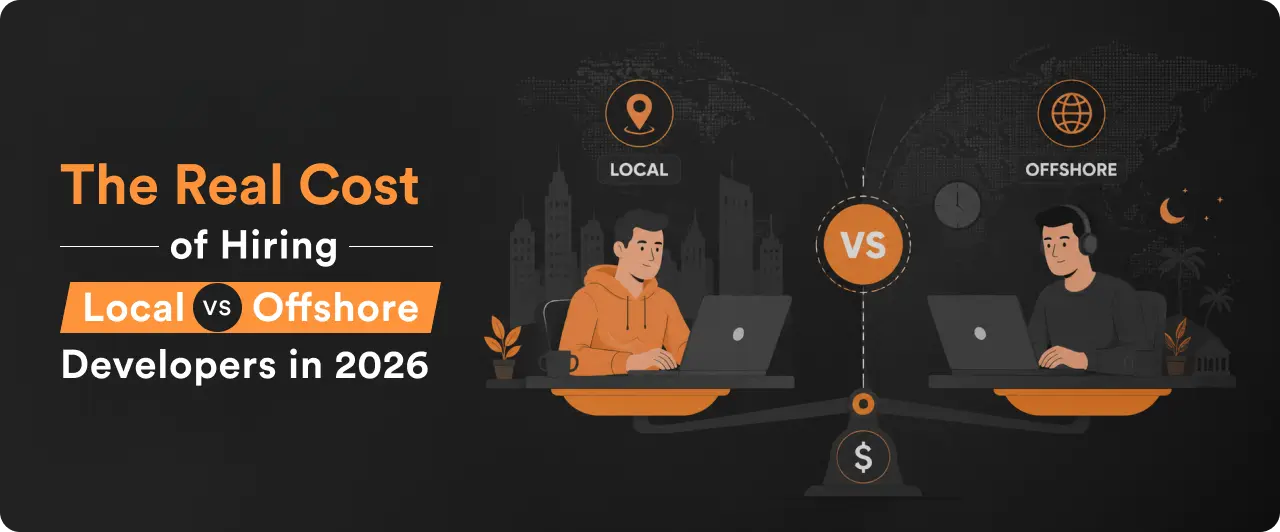

Building a startup in Australia comes with a specific set of headaches. Finding developers? Brutal. A decent React developer in Sydney gets 20 job offers before their LinkedIn profile goes live. Senior engineers command $150K base salaries, and that’s before equity, super, and benefits kick in.
Small teams can’t compete with Atlassian or Canva for talent. So, the founders started exploring alternatives. Offshore software development went from “something big companies do” to “how most smart startups operate.”
The model works especially well when there’s a software development company in Sydney handling coordination. Local oversight plus global talent equals sustainable growth.
What Is Offshore Software Development?
It’s hiring developers who work from another country. Geography used to matter enormously. Technology fixed most of that. What matters now is finding skilled engineers who can deliver quality work at reasonable rates.
Three common approaches exist in practice:
Three main models exist:
- Onshore means hiring within Australia. Same timezone, same culture, same astronomical costs.
- Nearshore points to nearby regions like Singapore or New Zealand. Closer time zones, moderately lower costs.
- Offshore goes global. You can hire developers from India, Vietnam, Poland, and Argentina. Significant cost advantages, massive talent pools.
Most startups that need to hire software developers fast end up offshore. Local recruitment timelines stretch to three or four months. Offshore teams can start within a fortnight.
8 Reasons Offshore Software Development Works for Australian Startups
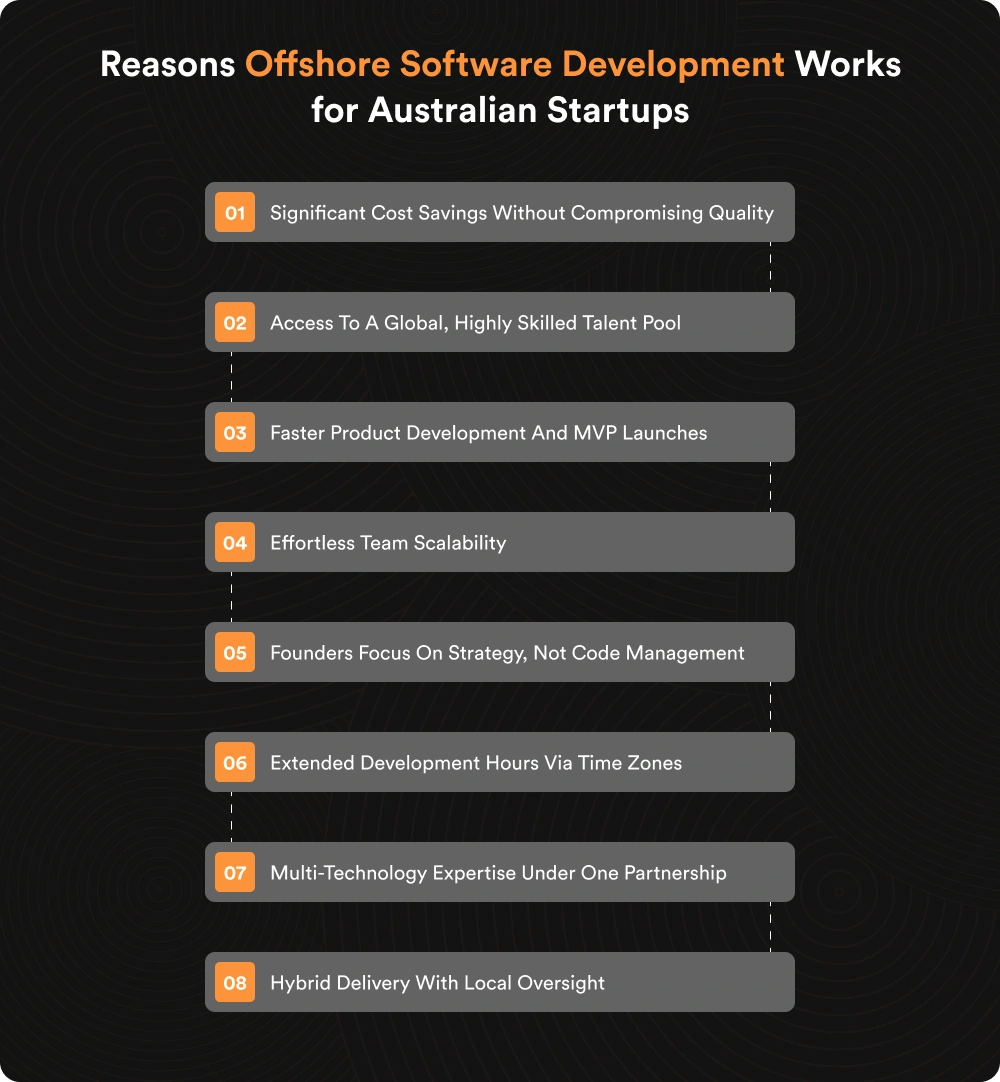
1. Significant Cost Savings Without Compromising Quality
A Melbourne-based senior developer costs about $140,000 annually. Add super, leave entitlements, workstation, software licenses, and office space. That’s $180,000 all-in. Multiply by team size, and capital burns fast.
An equivalent offshore developer runs $45,000-$60,000 annually. Fully loaded. Same skill level, same output, different postal code. Three highly-skilled offshore developers cost less than one local hire.
2. Access to a Global, Highly Skilled Talent Pool
Australia graduates roughly 6,000 computer science students each year. India graduates over a million. Poland produces exceptional developers from technical universities that rival MIT. Vietnam’s tech scene has exploded over the past decade.
The constraint in Australia isn’t just cost—it’s availability. When startups hire software developers offshore, they can find specialists instead of settling for generalists.
3. Faster Product Development and MVP Launches
Speed determines survival in early-stage startups. Dedicated offshore teams don’t juggle five different clients. They work on one product. Full attention, full accountability. Progress compounds quickly.
A Sydney healthtech company tried building their platform locally first. After six months, they had half an MVP. Switched to an offshore team. Had a working product in the market within ten weeks.
4. Effortless Team Scalability
The pre-seed stage might need two developers. Post-funding? Suddenly, ten developers are required. Six months later, when growth slows down? Back to four developers makes sense.
Try doing that with permanent employees. The hiring process alone takes months. Then there’s onboarding. Then, if scaling down becomes necessary, redundancy payments, notice periods, and morale damage.
Offshore software development treats team size like a dial instead of a commitment. Turn it up, turn it down, adjust based on actual needs rather than what seemed right three months ago.
5. Founders Focus on Strategy, Not Code Management
Technical founders face a specific trap. They get pulled back into coding because “nobody else understands the architecture.” That might be true initially. It’s also how startups stall.
Founder time belongs in customer conversations. In strategic planning. In investor relationships. In business development. These activities directly impact growth and can’t be delegated easily.
Writing code can be delegated. Offshore teams handle technical implementation. They make architecture decisions within defined parameters. Founders stay in the strategy layer where they add unique value.
6. Extended Development Hours via Time Zones
Offshore teams in different time zones create accidental advantages. Melbourne finishes for the day. The Ho Chi Minh City team starts their morning. They code, test, and deploy while Australia sleeps. The product moves forward continuously.
One fintech startup used this deliberately. Their Sydney team handled planning and customer work. Their Polish team handled implementation. Effectively got 16-hour workdays without burning anyone out.
7. Multi-Technology Expertise Under One Partnership
Most established offshore partners operate as complete development houses.
Need mobile development? They’ve got iOS and Android teams. Backend architecture? Python, Node, Go, whatever fits. Frontend? React, Vue, and Angular covered. Cloud infrastructure? AWS, Azure, and GCP specialists available. DevOps? CI/CD pipelines and monitoring sorted.
Contrast this with local hiring. Finding a React specialist takes six weeks. Then starting another search for backend. Managing multiple vendor relationships drains time and creates integration headaches.
Offshore software development bundles capabilities.
8. Hybrid Delivery with Local Oversight
The smart play combines offshore execution with local governance. Pure offshore can work. But it requires founders who understand software development intimately and enjoy managing remote teams. Most founders don’t fit that profile.
The hybrid model solves this. The engineering team works offshore at global rates. A software development company in Sydney handles project management, quality oversight, and stakeholder communication.
Local partners bridge cultural gaps. Clients get global pricing with local accountability. Risk drops substantially. Communication improves. Projects stay on track more consistently.
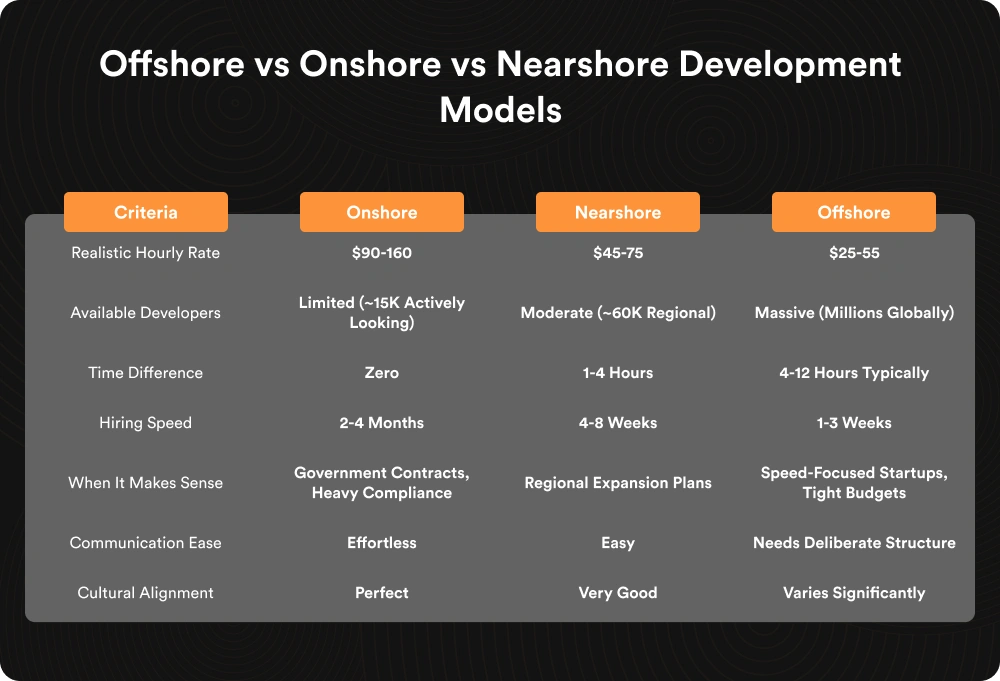
Offshore vs Onshore vs Nearshore Development Models
Different situations call for different approaches. Understanding the actual tradeoffs helps.
Final Thoughs

Offshore software development, particularly when combined with local oversight from a software development company in Sydney, has become standard operating procedure for resource-conscious Australian founders.
Frequently Asked Questions
Three benefits dominate in practice. Cost reduction hits 50-65% compared to local teams. Development speed improves because offshore partners can start immediately instead of after months of recruitment. Access to specialised skills solves the “can’t find anyone locally” problem that kills many technical initiatives.
A typical three-person team working for six months costs roughly $270,000-$450,000 using Australian developers. That same team and timeline run $95,000-$150,000 offshore. The difference—$175,000 to $300,000—extends runway by six to twelve months for most seed-stage startups.
Start by talking to other Australian founders who’ve gone offshore. Personal references matter enormously in this space. Check the partner’s experience with the specific tech stack needed. Evaluate communication during initial calls; problems here only get worse under pressure. Review their security certifications and IP protection measures carefully. Consider working through a software development company in Sydney that manages offshore relationships, especially for first-time offshore engagements.