Introduction
The retail industry in Australia has fundamentally changed. Mobile isn’t just another channel anymore. When Australians want to shop, they reach for their phones. And increasingly, they’re not just visiting mobile websites, they’re using retail apps.
Apps convert at 2-3 times the rate of mobile sites. Here’s the thing, though: not every app succeeds. Plenty of retailers build apps that barely get used. The difference comes down to features that actually matter to shoppers.
That’s where partnering with an experienced mobile app development company pays off. The good ones understand what Australian consumers expect. They know which features drive sales. Here are seven specific ways mobile apps boost retail revenue.
How To Use Mobile Apps To Improve Retail Industry Sales?
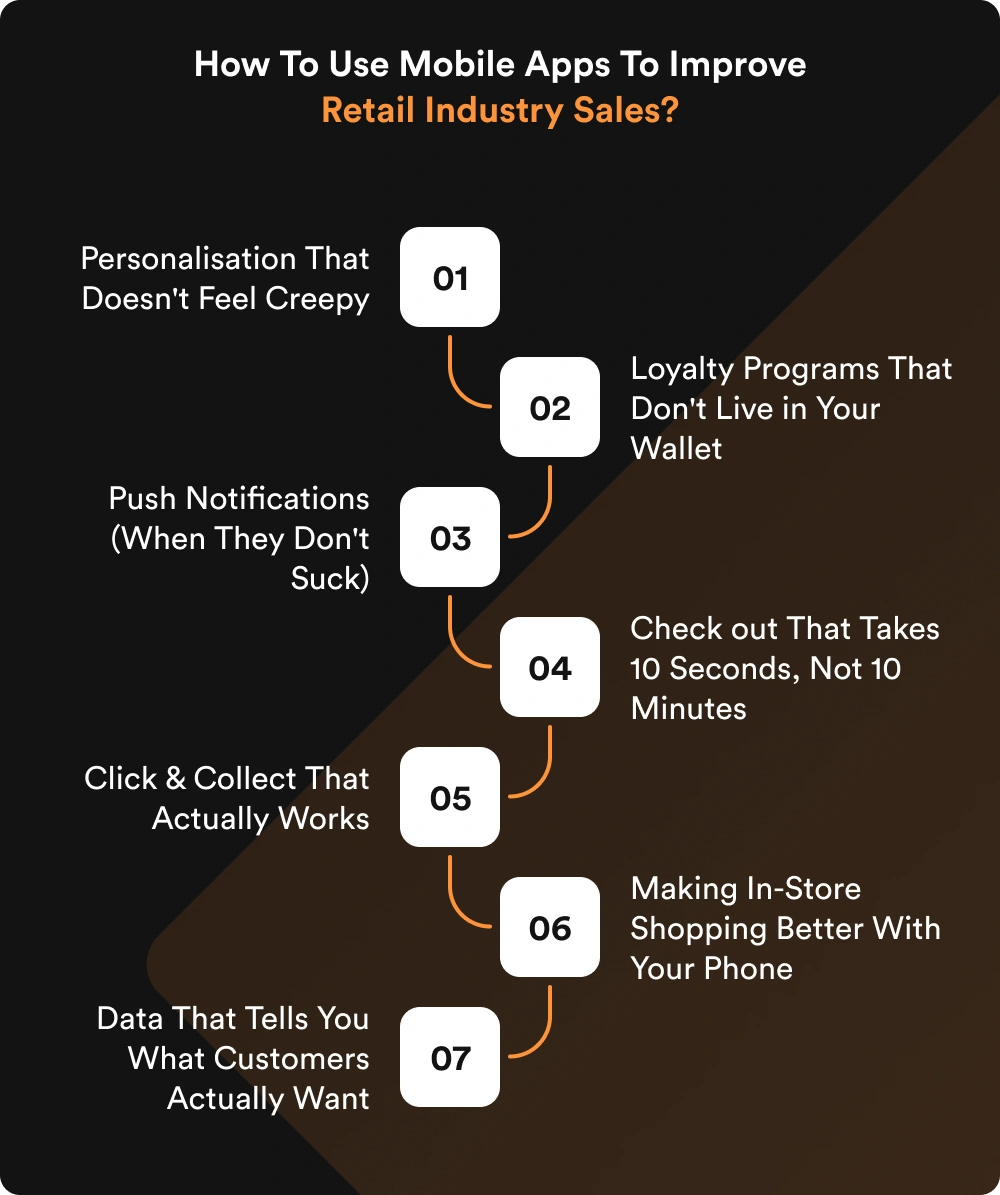
1. Personalisation That Doesn’t Feel Creepy
Mobile websites lose track when the browser closes. Apps remember everything (with permission, obviously). It learns what you like over time. It gets smarter with every choice. AI in retail industry applications track patterns without being invasive:
- Products viewed multiple times get featured in personalised feeds
- Purchase history shapes category recommendations
E-commerce mobile app development that focuses on personalisation typically sees 20-30% higher conversion rates.
2. Loyalty Programs That Don’t Live in Your Wallet
App-based loyalty works brilliantly in the retail store industry. Points show up instantly after purchase. Customers see their balance growing in real time.
Push notifications alert shoppers when they’ve earned enough points for a reward. That triggers another visit. Another purchase. Another point accumulation.
The best loyalty apps also tier offers based on customer value. When loyalty feels rewarding rather than transactional, customer lifetime value climbs dramatically.
3. Push Notifications (When They Don’t Suck)
Bad notifications get apps deleted. Good notifications drive sales.
The difference is relevance and timing. Push notifications that work the best:
- Flash sales that start in the next hour.
- Abandoned carts with items still in stock.
- Price drops on products someone viewed yesterday.
- Back-in-stock alerts for sold-out items.
AI segmentation identifies who should get which message. This level of targeting isn’t possible with mobile websites. Browsers don’t enable push notifications the same way. Apps own this advantage completely.
4. Check out That Takes 10 Seconds, Not 10 Minutes
Typing on phones is annoying. The whole process feels like work. Apps eliminate almost all of this friction. Payment details get stored securely after the first purchase. Shipping addresses save automatically. Apple Pay and Google Pay work with a fingerprint. Checkout becomes literally one tap.
Australian consumers have embraced digital wallets faster than most markets. Working with specialists in Shopify development in Sydney means getting these integrations right from day one. Every extra second in checkout costs conversions. Apps remove those seconds.
5. Click & Collect That Actually Works
Australians love click and collect. It combines the convenience that online shopping offers with the instant gratification of getting stuff now.
But execution matters enormously. Bad click & collect systems frustrate customers. Good ones become preferred shopping methods. Mobile apps excel here because they handle the complexity smoothly.
Plus, foot traffic from pickups creates additional purchase opportunities. Click & collect through apps isn’t just a convenience feature. It’s a profit driver.
6. Making In-Store Shopping Better With Your Phone
The online-versus-offline debate is over. Modern retail is both. The challenge is making the transition between channels feel seamless. Mobile apps bridge this gap better than any other technology.
Barcode scanning reveals reviews and detailed specs that don’t fit on shelf labels. Store maps help shoppers find specific products in large locations.
Digital catalogues show the full range, not just what’s physically stocked. Location-triggered offers reward customers for visiting. Walk into a store, get a notification about an exclusive app-user discount.
7. Data That Tells You What Customers Actually Want
Website analytics are fine. App analytics go deeper. Every interaction generates data. Which products get viewed longest? What search terms people use? How they navigate categories. Which features do they engage with? What makes them buy versus browse?
Ecommerce mobile app development platforms with serious analytics turn this information into revenue. AI in retail industry applications take this further with predictive capabilities. When done right, customers appreciate it because they find what they want faster.
Impact of Mobile App Features on Retail Sales in Australia
Mobile App Feature | How It Boosts Sales |
Personalised Recommendations (AI) | Increases AOV & conversion rate |
Loyalty & Rewards | Drives repeat purchases |
Push & In-App Notifications | Creates instant sales spikes |
One-Click Checkout | Reduces abandonment |
BOPIS/Click & Collect | Speeds up fulfilment |
In-Store App Features | Enhances hybrid shopping |
App-Based Analytics | Improves retargeting & upselling |
Finding the Right Mobile App Development Services in Australia
A quality mobile app development company asks about business goals before discussing technical specs. They want to understand customer behaviour, sales cycles, and competitive positioning. They have experience specifically in retail. Generic app developers often miss these nuances.
They understand the Australian market. The right partner treats your app as a revenue channel, not a technical project.
So What Now?
Mobile apps aren’t experimental anymore for Australian retailers. They’re standard equipment for serious businesses.
🎧 Podcast: Listen: 7 Mobile App Wins for Aussie Retailers Now
Discover seven proven app strategies, personalisation, loyalty, push, one-tap checkout, BOPIS, in-store features and app analytics that boost Australian retail sales. Actionable tips on design, notifications and measurement to turn your app into a reliable revenue channel.
🎙 Press play and avoid costly mistakes.
Frequently Asked Questions (FAQs)
Yes—apps typically convert 2–5x higher due to speed, personalisation, stored preferences, and immersive shopping flows.
Very effective—notifications create instant engagement, promote limited-time offers, and recover abandoned carts.
Absolutely—customers who use loyalty apps tend to shop more frequently and redeem points, increasing LTV.
Yes—BOPIS increases foot traffic, reduces delivery costs, and speeds up order fulfilment, driving revenue uplift.
Native apps are ideal for high personalisation, notifications, and loyalty features, while PWAs suit smaller retailers wanting a low-cost alternative.
Key metrics: app installs, retention rate, session duration, conversion rate, average order value (AOV), repeat purchase rate, and revenue from push notifications.