
Digitise to Compete: Manufacturing’s App-First Future
Manufacturing in Australia looks different from what it did five years ago. Walk into any modern factory and you’ll see operators with tablets, not clipboards. Production managers check live dashboards instead of waiting for end-of-shift reports.
Labour costs in Australia are among the highest in the world. Add supply chain disruptions. Then there’s global competition. Apps address these challenges in practical ways.
Manufacturers are partnering with companies offering mobile app development in Sydney to build practical digital tools. These apps handle everything from tracking machine performance to managing inventory across multiple sites. Digital transformation used to be optional. Now it’s the price of staying competitive.
Why Manufacturers Need a Digital App Strategy?
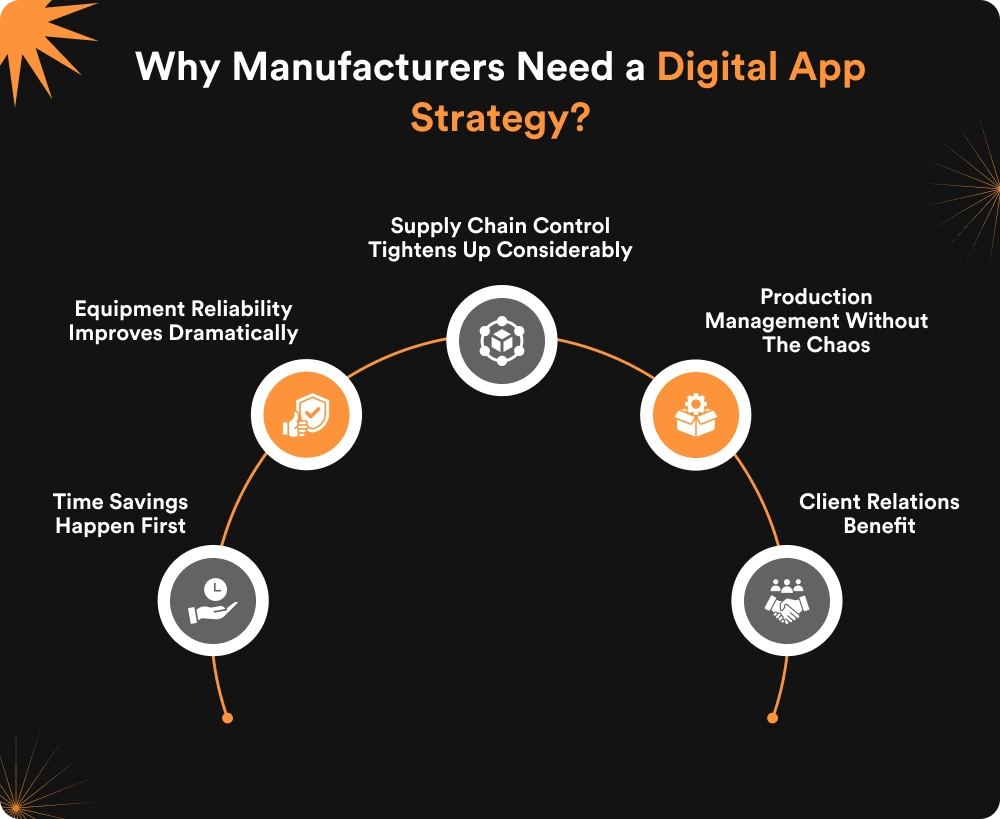
Digital app manufacturing creates advantages that competitors without these tools simply can’t match.
Time savings happen first
Paperwork gets automated. Approvals move faster. Shift handoffs become smoother because information is transferred digitally instead of verbally.
Equipment reliability improves dramatically
Traditional maintenance follows a schedule. Predictive maintenance works differently. Sensors monitor temperature, vibration, and oil quality. The app analyses patterns. When readings drift outside normal ranges, it alerts the maintenance team.
Production management without the chaos
Production scheduling used to mean juggling spreadsheets, sticky notes, and institutional knowledge. Modern workflow apps change this completely. They know machine capacity, staff availability, and material inventory. When changes happen, the system recalculates and updates everyone automatically.
Supply chain control tightens up considerably
Materials get tracked from supplier delivery through to the finished product. Waste decreases. Timing improves. Costly shortages become rare. Specialists offering mobile app development in Sydney build integrated systems to sync with existing equipment.
Client relations benefit
Automatic order updates go out at each milestone. Delivery tracking is transparent. Those “where’s my order?” calls drop significantly. When customers get real-time visibility and quality products, they become your loyal advocates.
Choosing the Right Apps for Your Operation
Not every factory needs every type of app. Start where problems hurt most.
App Type | Primary Function | Quick Win Indicator |
Inventory & Supply Chain | Real-time stock tracking, automatic reorder alerts | Frequent stockouts or excess inventory |
Equipment Monitoring | Track machine health, predict failures | High unplanned downtime costs |
Production & Workflow | Schedule optimization, task coordination | Bottlenecks and delays |
Quality Control | Digital inspections, automated audit trails | Compliance issues or documentation burden |
Customer & Order Management | Order tracking, automatic updates | High volume of status inquiries |
Experts in iOS app development in Sydney often recommend starting with Apple devices for these customer-facing tools. Native iOS apps typically perform better than web alternatives.
Building a Digital App Strategy That Actually Works
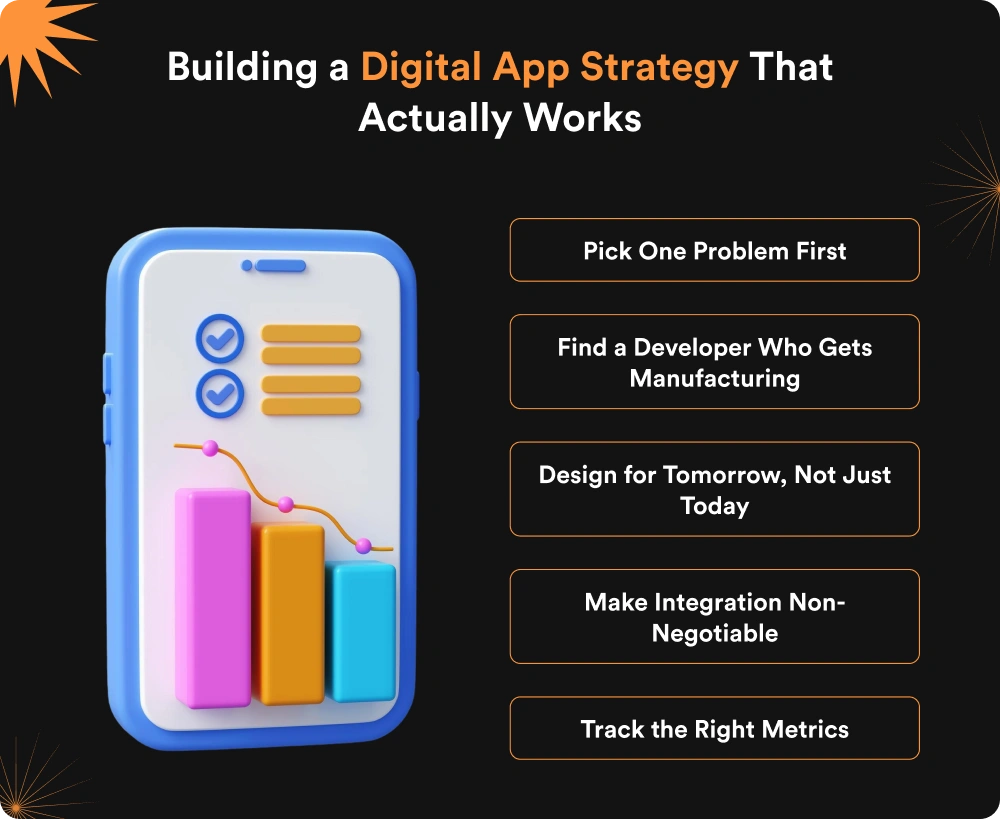
Pick One Problem First
Trying to digitise everything at once leads to expensive failure. Pick the biggest pain point.
Build an app that solves that specific problem. Get it working properly. Then move to the next problem.
Find a Developer Who Gets Manufacturing
Not all app developers understand industrial environments. Factories have unique requirements. Look for professionals offering mobile app development in Sydney with manufacturing experience. Check their previous projects. Talk to their other clients.
Design for Tomorrow, Not Just Today
Production changes. Companies grow. New equipment gets added. Apps need to handle this evolution. Scalable architecture costs a bit more upfront. It saves enormously down the road. Adding new machines, new users, or new features should be straightforward.
Make Integration Non-Negotiable
Apps that don’t talk to existing systems create more work, not less. Proper integration means:
- Pulling data from existing sensors and equipment
- Updating ERP and CMMS systems automatically
- Syncing with accounting and inventory platforms
- Connecting to customer management tools
Some manufacturers worry about integration complexity. Custom manufacturing services exist specifically to handle these challenges. Specialists know how to connect diverse systems.
Track the Right Metrics
How do you know if the app is working? Measure what matters:
Operational Metrics:
- Production throughput (units per shift)
- Equipment uptime percentage
- Order fulfilment time
- Inventory turns
- Defect rates
Financial Metrics:
- Maintenance cost per unit produced
- Labour cost per unit produced
- Working capital tied up in inventory
- Cost per order processed
Hard numbers justify investment. They also guide improvements and future development.
🎧 Podcast: Digital App Strategy for Australian Makers

How digital apps cut downtime, automate workflows, and tighten supply chains across Australian factories. Practical guidance on choosing, integrating, and measuring apps for clear ROI, drawn from your manufacturing blog.
🎙 Press play and avoid costly mistakes.
Making the Move to Digital Manufacturing
Australian manufacturers face a choice. Maintain current practices and accept declining competitiveness. Or invest in digital tools and stay relevant. Custom manufacturing services can tailor solutions to specific needs.
Frequently Asked Questions (FAQs)
Competitors are already using them. Every manufacturer with smart systems gains efficiency advantages. Those without these tools fall further behind on cost and capability. Someone faster and cheaper takes the business.
Sensors detect changes in equipment performance before catastrophic failures occur. Temperature spikes, unusual vibrations, or efficiency drops trigger alerts. Maintenance teams fix issues during scheduled downtime instead of dealing with emergency shutdowns.
Absolutely. Apps enhance exactly what Australian manufacturers compete on—quality, customisation, and reliability. Better traceability systems. Faster turnaround times. More consistent results. Export clients demand these capabilities, and apps deliver them.
Maintenance monitoring or inventory management typically shows measurable ROI within six months. Production workflow apps take longer because they need more integration, but they often deliver larger long-term benefits. Start where your biggest pain point is.
Pilot projects let you test the app without enormous costs. Pick your biggest problem. Build an app that solves it, train staff thoroughly, and measure results carefully. Prove value before committing to broader rollout.
Benchmarks from local manufacturers show downtime reductions, output improvements, and maintenance cost cuts. Payback periods typically hit 12-18 months. Results vary by industry and implementation quality.
Less data entry, more data analysis. Staff roles shift from administrative to strategic. This transition requires training investment. Companies that prioritise upskilling see better adoption and results.