
The Backbone of Aussie eCommerce: Magento’s Unmatched Strength
Magento isn’t going anywhere. Many of Australia’s biggest online retailers run on it. Why? Flexibility tops the list. The platform handles massive traffic without breaking. Multiple storefronts? No problem. Complex integrations? Built for it.
Fast-growing Aussie businesses need that kind of infrastructure. When Black Friday hits or a campaign goes viral, Magento scales. It doesn’t buckle under pressure.
This guide breaks down practical strategies that improve the performance of growing Magento stores across Australia. Magento development services can implement these strategies faster and better. Local expertise makes a real difference here.
10 Proven Magento eCommerce Best Practices
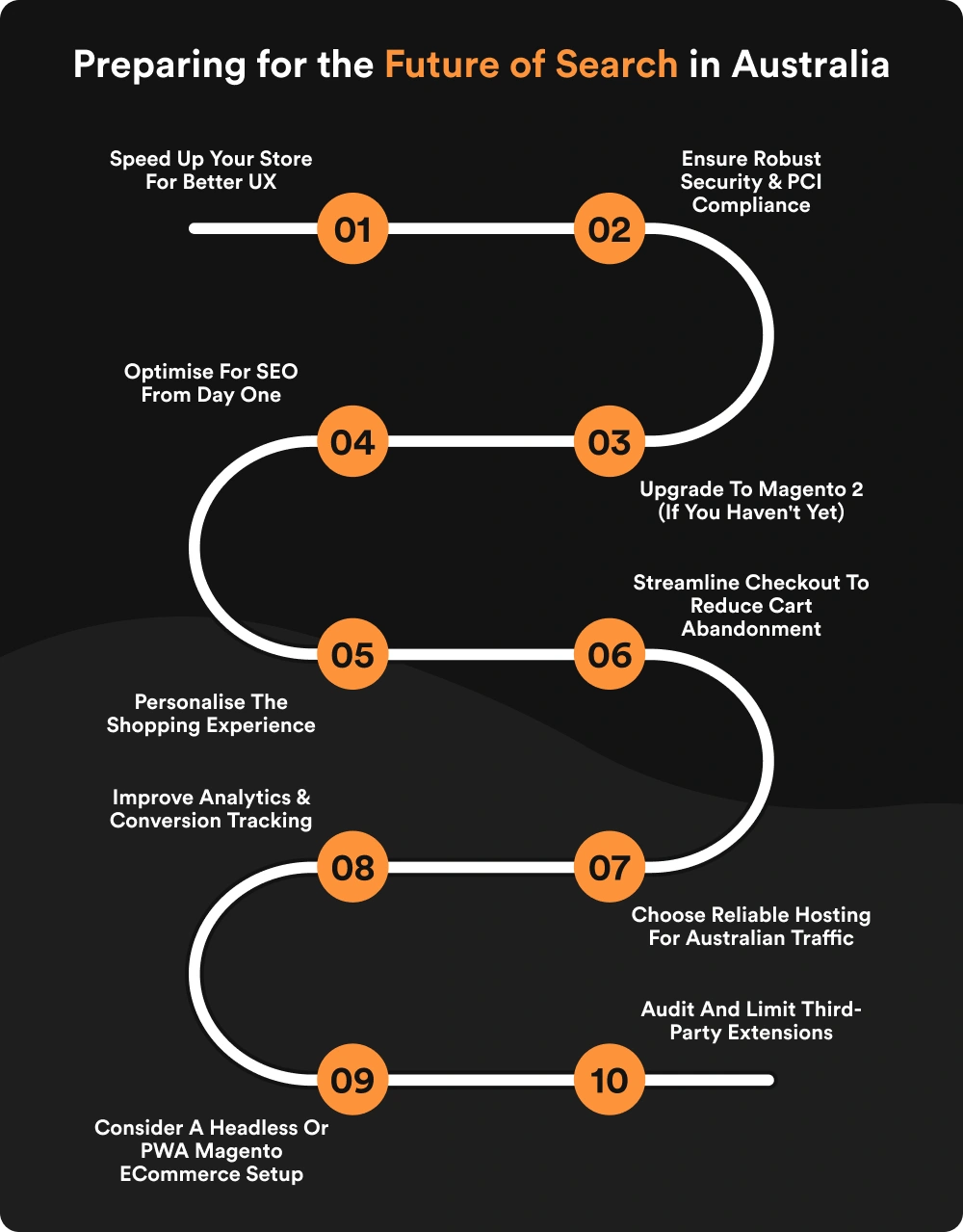
1. Speed Up Your Store for Better UX
Page speed kills conversions. One second of delay? Sales drop. It’s that simple.
Here’s what actually works:
- Compress images before uploading (aim for under 100KB per product image)
- Enable full-page caching
- Use a CDN with Australian edge servers
A Magento developer in Melbourne can run proper performance audits. They’ll find the bottlenecks you didn’t know existed. Server response times, database queries, poorly coded extensions—all of it gets exposed and fixed.
2. Ensure Robust Security & PCI Compliance
Security patches exist for a reason. Apply them. Every single one. Hackers love outdated Magento installations.
Strong admin credentials aren’t optional. Neither is two-factor authentication. One compromised admin account can sink an entire business.
Working with specialists in Magento development services makes PCI compliance manageable. They handle the technical requirements. They ensure customer data stays protected.
3. Optimise for SEO from Day One
SEO doesn’t happen by accident. Meta tags need writing. URLs need structure. Mobile responsiveness needs testing.
Local keywords matter tremendously. “Magento eCommerce in Australia” targets domestic shoppers. “Best online furniture store Sydney” captures local intent.
Structured data helps search engines understand products. Rich snippets increase click-through rates. Site architecture affects crawling efficiency. These details compound over time.
4. Upgrade to Magento 2 (If You Haven’t Yet)
Still on Magento 1? Time to move. Support ended. Security patches stopped. The platform is officially legacy.
Magento 2 brings real improvements:
- Faster page loads
- Smoother checkout
- Better mobile performance
- Modern codebase
Yes, migration takes effort. But staying on outdated technology costs more in the long run. Magento development services can help with the migration.
5. Personalise the Shopping Experience
Generic experiences don’t convert like they used to. Shoppers expect relevance.
AI-driven product recommendations work. They increase average order values by suggesting items customers actually want. Dynamic pricing adjusts to demand and competition. Smart businesses use both.
Loyalty programs keep customers coming back. Personalised email campaigns get opened. Tailored homepage experiences drive engagement. The technology exists, use it.
6. Streamline Checkout to Reduce Cart Abandonment
Cart abandonment in Australia hovers around 70%. That’s money left on the table.
Guest checkout removes friction.
Not every visitor wants to create a new account just to purchase something. Local payment options matter enormously. PayPal, Afterpay, Zip—these aren’t nice-to-haves. They’re expected. An expert offering Magento web development in Sydney can customise checkout flows specifically for Australian buyers.
7. Improve Analytics & Conversion Tracking
Guesswork doesn’t scale businesses. Data does.
Google Analytics 4 provides the foundation. Hotjar shows where users click (and where they don’t). A/B testing tools like VWO or Optimizely turn hunches into proof.
Answer critical business questions with data, not opinions. High-performing products deserve more visibility. Weak spots need fixing or cutting. Simple as that.
8. Choose Reliable Hosting for Australian Traffic
The hosting location affects performance dramatically. Servers in Sydney load faster for Sydney shoppers. Servers in Singapore add latency. Australian data centres minimise lag. They also help with data sovereignty requirements under Australian law.
Cloud-based hosting handles traffic spikes gracefully. Boxing Day sales create a massive load. End-of-financial-year campaigns spike traffic. Scalable infrastructure prevents crashes when it matters most.
9. Audit and Limit Third-Party Extensions
Too many extensions slow everything down. They conflict with each other. They introduce security vulnerabilities. Some stop getting updates entirely.
Quality beats quantity here. Before installing any extension:
- Check the developer’s reputation
- Read recent reviews
- Verify active support
- Test compatibility with your Magento version
Regular audits help. Remove unused extensions. Update active ones.
10. Consider a Headless or PWA Magento eCommerce Setup
Progressive Web Apps represent the future of eCommerce. They load instantly. They work offline. They feel like native mobile apps. Conversion improvements range from 30-35% after PWA implementation.
A skilled Magento developer can transition sites to PWA architecture. The investment pays off through better mobile engagement and higher conversion rates. Mobile traffic dominates Australian eCommerce. Optimising for it isn’t optional anymore.
🎧 Podcast: Google AI Mode & Australian SEO Guide Now!!

A practical episode unpacking 10 proven Magento optimisations, speed, security, SEO, checkout, and PWA strategies tailored for Australian stores. Actionable tips on hosting, extension audits, and conversion wins to prepare your store for peak traffic.
🎙 Press play and avoid costly mistakes.

Traditional vs PWA Magento Store Comparison
App Type | Primary Function | Quick Win Indicator |
Inventory & Supply Chain | Real-time stock tracking, automatic reorder alerts | Frequent stockouts or excess inventory |
Equipment Monitoring | Track machine health, predict failures | High unplanned downtime costs |
Production & Workflow | Schedule optimisation, task coordination | Bottlenecks and delays |
Quality Control | Digital inspections, automated audit trails | Compliance issues or documentation burden |
Customer & Order Management | Order tracking, automatic updates | High volume of status inquiries |
The right Magento developers keep stores competitive. Markets evolve. Expert partners help businesses adapt.
Final Takeaway: Magento Success is a Continuous Process
Partnering with trusted agencies offering Magento web development in Sydney teams gives Australian brands the edge.

Frequently Asked Questions (FAQs)
Start with caching and CDN implementation. Compress all images. Host on Australian servers. These three changes deliver immediate improvements. More advanced optimisation requires developer expertise—database tuning, code profiling, and infrastructure adjustments.
Security patches need immediate application. Enable two-factor authentication on all admin accounts. Use strong, unique passwords. Work with certified Magento developers in Melbourne who understand security best practices. PCI compliance requires ongoing attention.
Mobile optimisation ranks first. Google’s mobile-first indexing makes it critical. Local SEO targeting specific Australian cities works well. Schema markup for products, reviews, and FAQs increases visibility. Quality content targeting Australian search intent drives sustainable traffic.
For mobile-heavy traffic patterns (most Australian stores), yes. PWAs deliver measurably better performance. Load times drop significantly. Engagement increases. Conversion rates improve by 20-30% on average. The initial investment pays back through higher revenue.
Cloud hosting with Australian data centres provides the best foundation. AWS Sydney region works well. So does Azure Australia. Auto-scaling prevents crashes during peak loads.
Limit extensions to essential functionality. Check the developer’s reputation. Read recent reviews. Verify active support and regular updates. Test in staging environments first. Remove anything unused during regular audits.
Checkout funnel optimisation delivers fast results. Test removing unnecessary form fields. Try different payment button colours and text. Product recommendation A/B tests often show quick wins. Heatmap analysis reveals friction points immediately. Fix those first—they offer the easiest improvements.