Introduction
Here’s the problem: traditional advertising eats money without proving results. Brands spend thousands on campaigns and cross their fingers, hoping something sticks. Performance marketing changes that.
Pay only when something measurable happens, a click, a sale, or someone signing up. No fluff. No wasted spend. Just the results that show up in the bank account.
That’s why fashion brands team up with a digital marketing agency in Sydney, because guessing doesn’t work anymore.
What Is Performance Marketing?
Picture this: traditional advertising is renting a massive billboard and hoping people notice. Performance marketing pays the salesperson only when they close a deal.
The difference? Accountability.
Fashion moves fast. What’s trending on Monday is old news by Friday. Campaigns need that same speed. If Instagram ads aren’t converting by Tuesday afternoon, switch them out. If Google Ads are crushing it, pump more budget in before the trend dies.
A digital marketing company doesn’t pitch ideas and hope they work. They track everything, kill what’s failing, and double down on what’s winning.
Core Performance Marketing Strategies for Fashion Brands
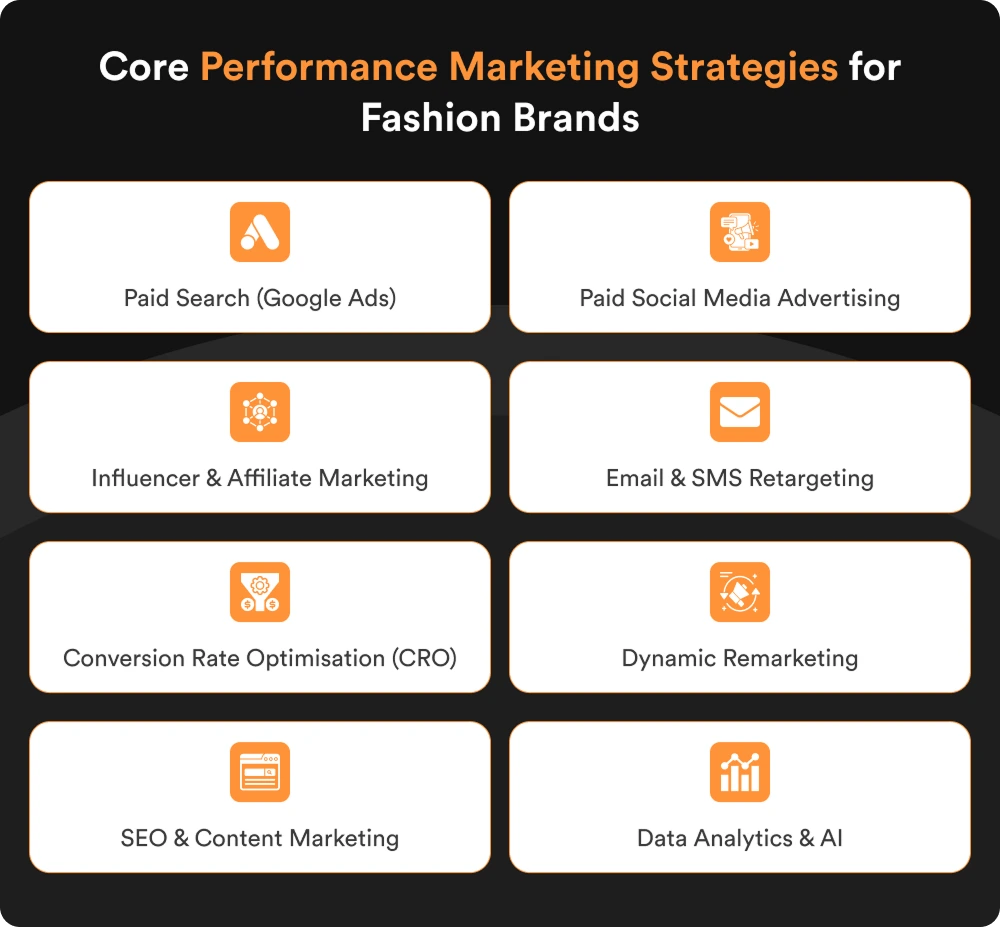
Paid Search (Google Ads)
Someone types “sustainable fashion Sydney” at 2 AM. They’ve got their credit card out.
That’s the moment Google Ads captures. Not “maybe interested” people. People who are actively looking to buy right now.
The catch? Keywords need to match what real shoppers actually type. And landing pages need to close the deal fast. Get it wrong and watch money evaporate.
Paid Social Media Advertising
Fashion sells through the eyes first. Instagram, TikTok, and Pinterest are built for visual products.
Carousel ads let people swipe through a whole collection. Shoppable posts cut out the friction between “I want that” and checkout. Video shows fit, movement, stylingthings static images miss.
Then there’s retargeting. Someone looked at the boots but didn’t buy them. Those boots follow them around the internet. Annoying? Maybe. Effective? Absolutely.
Influencer & Affiliate Marketing
Australian fashion influencers have loyal followers who trust them. That trust translates to sales when it’s authentic.
The performance model keeps it honest. Influencer drives 20 sales? Here’s the commission. Drives zero? No payment. Simple. Brands get sales. Influencers get paid for actual results.
Email & SMS Retargeting
Cart abandonment in fashion sits around 70%. That’s not unusual; that’s expected.
Someone adds a dress to their cart at lunch, gets distracted, and forgets about it. An email reminder that evening can recover that sale. SMS hits even harder. Add a 10% discount and watch conversion rates jump. Beyond abandoned carts, these channels keep customers coming back.
Conversion Rate Optimisation (CRO)
One second faster page load can significantly boost conversions. CRO hunts for these wins everywhere. Check out too complicated? Simplify it. Product photos loading slowly? Fix that. Button colour not standing out? Test alternatives.
A digital marketing agency in Sydney runs these tests constantly.
Dynamic Remarketing
Basic retargeting shows generic “come back to our store” ads. Dynamic remarketing shows the exact jacket someone stared at for three minutes.
Three dresses in the cart? Those three dresses show up in the ad. Relevance matters. People don’t mind seeing ads for stuff they actually want. They hate seeing random products they never looked at.
SEO & Content Marketing
Paid ads deliver instant traffic. SEO builds an asset that keeps paying off.
The blog post about “Summer Fashion Trends 2025” ranks on Google. Brings in shoppers for months without spending another dollar. Category pages optimized for search pull in people searching for exactly what the brand sells. Smart play? Both together. Paid ads for quick wins and testing. SEO for traffic that compounds over time.
Data Analytics & AI
Campaigns run on numbers now, not creative instincts alone.
Which products are people clicking? Which ads drive actual sales? What time of day converts best? Which audiences spend the most? AI takes those patterns and predicts what happens next. It automatically moves the budget toward what’s working.
Performance vs Traditional Marketing
Aspect | Performance Marketing | Traditional Marketing |
|---|---|---|
Payment | Pay for results | Pay upfront and hope |
Tracking | Know exactly what works | Estimate and guess |
Speed | Change campaigns today | Wait weeks to pivot |
Targeting | Show ads to exact people | Broadcast to everyone |
ROI | Clear numbers in real-time | Maybe figure it out later |
🎧 Listen Now: Learn How Fashion Brands Boost Conversions with Smart Marketing

Discover how leading fashion and apparel brands drive measurable growth through data-driven campaigns, AI-powered insights, and conversion-focused strategies. Tune in to uncover proven performance marketing tactics that turn clicks into loyal customers.
🎙 Listen in and make a confident decision for your next project.
Conclusion
Performance marketing lets fashion brands replace guesswork with measurable action, spend where it works, test rapidly, and optimize relentlessly. Use targeted paid media, CRO, and dynamic retargeting to cut wasted budget and scale profitable channels. Keep iterating on data, creative tests, and partnerships to turn insights into consistent revenue.

Frequently Asked Questions (FAQs)
Google Ads catches people actively shopping. Instagram and TikTok work for discovery and visual storytelling. Influencer partnerships add credibility that ads alone can’t buy. Winning approach uses all three feeding into each other.
Track CPA, ROAS, and customer retention. If those numbers look healthy, campaigns are profitable. If not, something needs fixing fastand the data shows exactly what.
Focus on search keywords that show buying intent: “buy,” “shop,” and specific product names. Target people who’ve visited before. Retarget anyone who viewed products or added items to the cart. Layer all three approaches together.
Most successful brands put 10-20% of monthly revenue into performance marketing. Start smaller if neededeven 5% makes a difference. Scale up when the returns prove it’s worth it.
Automate the routine stuff so humans can focus on strategy. Watch performance metrics daily, not weekly. Test new creative before existing ads burn out. Most importantly, get expert help before making expensive scaling mistakes.