Australia’s online shopping habits have shifted for good. Payments are faster, delivery is more reliable, and most shoppers don’t think twice about buying things online they’d have queued for in-store five years ago.
If you’ve been sitting on an ecommerce idea, 2026 is a reasonable time to move on it. The market sits at USD 51.22 billion this year. And it’s projected to hit USD 90 billion by 2030. That doesn’t mean you need to start a business immediately. First, you must pick your niche carefully.
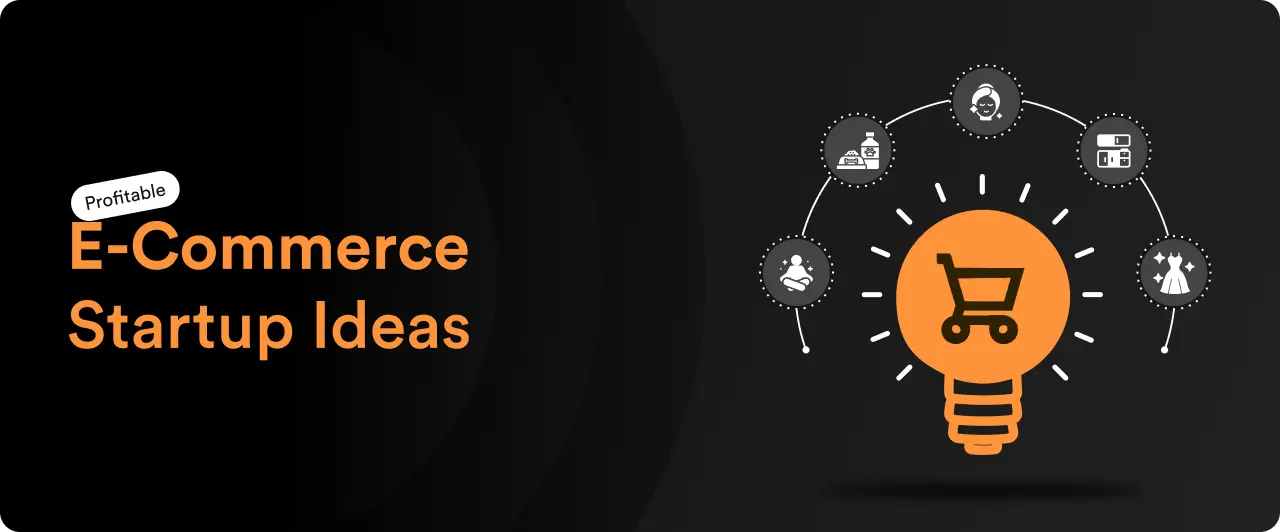
Here are 10 startup business ideas worth considering.
10 Profitable Ecommerce Startup Ideas For Australian Entrepreneurs in 2026
1. Niche Product Stores
Selling to everyone is a fast way to sell to no one. Niche stores win because they fix real problems for specific people. Tight focus means loyal customers. Loyal customers mean your marketing budget stretches further.
2. Sustainable Living Products
Australian shoppers are putting their money into products that align with their values. Biodegradable goods, sustainable fashion, and zero-waste products are all gaining ground. The segment is forecast to grow at a CAGR of 9.8% from 2024 to 2030. This one has staying power.
3. Health and Wellness
Supplements, organic vitamins, fitness gear, mental wellness products — all moving fast. Margins can be solid. But this space runs on trust. Get your education content and compliance sorted early. Don’t treat it as a later problem.
4. Clean Beauty and Skincare
Australians have got picky about what goes on their skin. Natural skincare, cruelty-free cosmetics, and dermatologist-backed products sell well — and customers come back. Just be upfront about your ingredients. That transparency will keep customers longer than any promo code.
5. Pet Supplies and Premium Pet Care
Australians don’t cut corners on their pets. Premium pet food, grooming, toys, and health products sell well. Quality matters here more than price. Get that right, and retention takes care of itself.
6. Subscription Boxes
Subscriptions give you predictable revenue. Wellness kits, gourmet foods, pet supplies, hobby boxes — the niche options are wide. The real advantage is economics. You’re not chasing one-off sales. You’re building a recurring base that compounds over time.
7. Niche Fashion and Apparel
Don’t just start your business on Amazon. Go specific instead. Modest fashion, plus-size, gender-neutral, and locally inspired. These niches have real, underserved audiences. The narrower your focus, the less you spend on finding your customer.
8. Home and Kitchen Products
Australians want products that do more and cost less to run. Australians want portable, multifunctional, and energy-efficient products. The home appliance segment is projected to grow at a CAGR of 9.1% from 2024 to 2030. The demand is there. The question is whether your product range reflects it.
9. Specialty Food and Gourmet Products
Online grocery is growing fast in Melbourne and other cities. Local produce, artisan goods, specialty diets, ethnic groceries — if you can source something genuinely hard to find, you have a real edge. That’s not something a marketplace can easily copy.
10. AI-Powered Personalisation Stores
AI personalisation isn’t a gimmick anymore. It reads shopping patterns, browsing behaviour, and purchase history to show customers what they actually want. Build it in from day one. Retrofitting it later costs more and works worse.
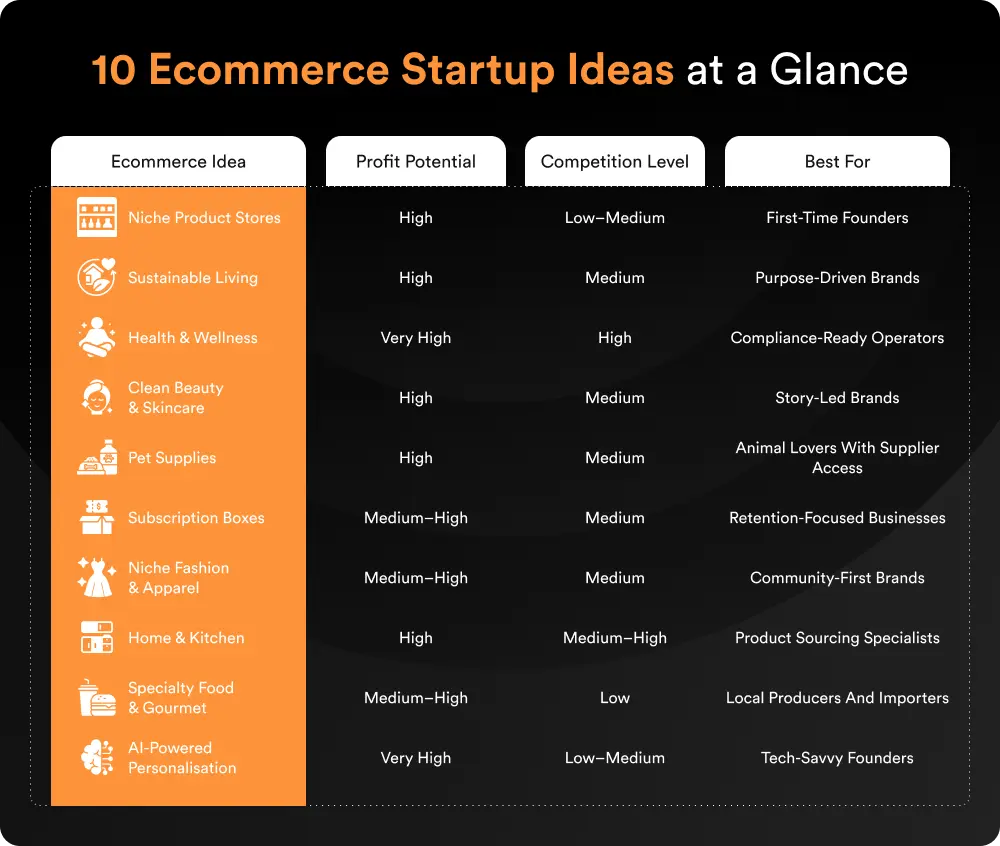
10 Ecommerce Startup Ideas at a Glance
🎙️ Best Ecommerce Business Ideas to Launch in 2026

Thinking of starting an ecommerce business in Australia? This episode breaks down 10 practical startup ideas that are already showing strong demand in 2026.
From niche stores to AI-powered personalization, we cover where real opportunities exist.
We also touch on what makes these ideas profitable and scalable long term.
If you’re serious about building something that lasts, this is a good place to start.
Start Your Business With The Right Ecommerce Development Company
The ecommerce platform shapes everything downstream. Magento development services have become a go-to choice for Australian startups that need serious flexibility. An experienced ecommerce development company will help you avoid the common trap of launching on a platform you outgrow in 18 months.
Frequently Asked Questions (FAQs)
Sustainable products and health and wellness are where the money is right now. Pet care and subscription boxes aren’t far behind. These niches have decent margins and high customer loyalty.
AI-personalised stores, clean beauty, specialty food, and niche fashion are picking up pace — particularly with younger shoppers in Sydney and Melbourne.
Large catalogues, multi-currency, custom integrations — Magento handles all of it without breaking. Scaling becomes difficult with most entry-level platforms. They eventually hit a limit.
A basic store? A few thousand dollars. A custom-built platform through a professional ecommerce development company runs anywhere from $15,000 to $100,000+.
The most important features are simple checkout and a mobile-first design. Next, you should focus on AI recommendations and logistics integrations.