The holiday season sales can make or break an online store’s yearly revenue. Australian shoppers spent over $62 billion online last year, with a massive chunk coming between November and January.
Black Friday, Cyber Monday, Christmas, and Boxing Day aren’t just dates anymore. They’re critical revenue events that often account for 30-40% of annual sales.
Here are the best holiday marketing strategies that actually work.
1. Start Planning Early
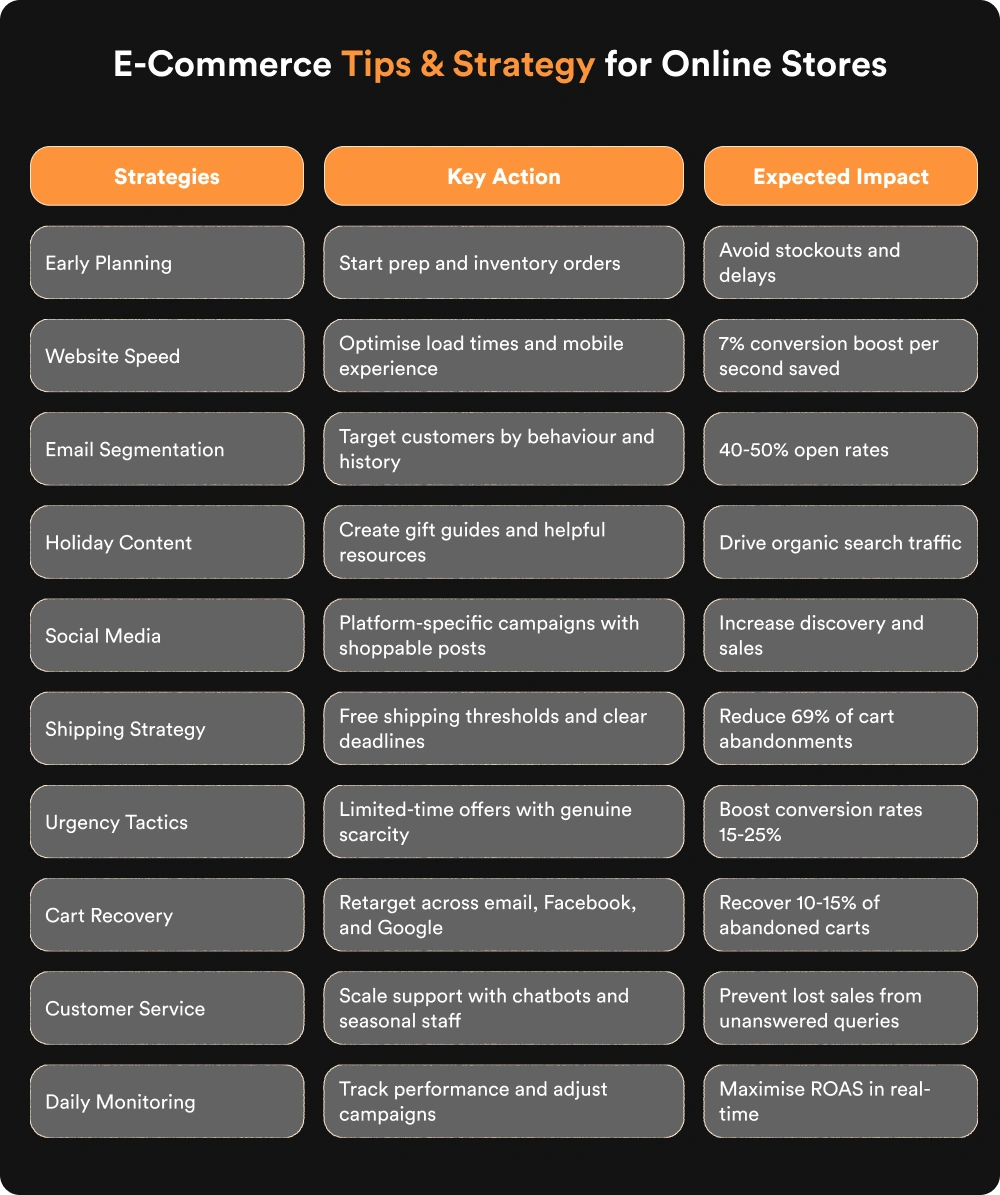
Most store owners wait until the last moment. That’s a mistake. To make this holiday season start planning early. This covers inventory ordering, creative development, and campaign testing before the rush.
Starting early means better stock levels, sharper campaigns, and fewer last-minute fires to put out.
2. Optimise Your Website Speed
A one-second delay drops conversions by 7%. During high-traffic periods, that’s thousands in lost revenue. Over 60% of Australian shoppers browse on mobile. If your site is slow on phones, you’re turning away the majority of potential customers.
Test your site under simulated high traffic before Black Friday. Finding out your checkout crashes when you have 500 concurrent users on Friday afternoon is too late.
3. Segment Your Email Campaigns
Email delivers a higher ROI than any other channel. But generic blasts don’t work anymore.
Segment by purchase history, browsing behaviour, and engagement levels. Send VIP customers early access. Give cart abandoners gentle reminders. Offer new subscribers welcome discounts.
4. Create Useful Holiday Content
Gift guides work when they solve real problems. Australians get overwhelmed by choice during the holidays.
Content that drives traffic and sales:
- “Gifts Under $50 That Look Expensive”
- “Secret Santa Ideas Your Colleagues Will Actually Like”
- “Last-Minute Gifts That Don’t Scream Last-Minute”
This content attracts search traffic while positioning products as solutions. Working with digital marketing experts in Sydney, develop content strategies that convert.
5. Master Social Media by Platform
Each platform serves different purposes. Trying to do everything everywhere spreads resources too thin.
Product photography and lifestyle shots work best. Stories with polls and questions boost engagement. Shoppable posts let customers buy without leaving the app.
TikTok
Jump on trending sounds quickly. Show behind-the-scenes content. Make products the hero without obvious selling. Australian TikTok users respond to humour and authenticity.
Still drives significant sales, especially for 35+ demographics. Dynamic product ads retarget website visitors with products they viewed.
Pick two platforms where your customers actually spend time. Dominate those instead of being mediocre on five.
6. Handle Shipping Strategically
High shipping costs cause 69% of cart abandonments in Australia. Free shipping isn’t optional anymore. Set thresholds 20-30% above the average order value. This encourages adding items to qualify while protecting margins.
Offer express options for last-minute shoppers willing to pay premium rates. Some customers will happily pay $25 for overnight delivery on December 22nd.
7. Create Genuine Urgency
Flash sales work. Fake countdown timers that reset don’t. Customers spot artificial scarcity instantly. It damages trust and hurts conversions long-term.
Real urgency tactics:
- First 100 orders get a bonus gift
- Limited edition holiday packaging (actual limited quantities)
- Genuine stock levels shown (“Only 3 left”)
A digital marketing company with solid ethics helps create urgency without manipulation.
8. Retarget Abandoned Carts Aggressively
Cart abandonment spikes during holidays. Shoppers compare prices, add wishlist items, and get distracted.
Don’t immediately offer discounts in the first reminder. Many customers just need a nudge, not a bribe. Save the discount for the third touchpoint if they still haven’t converted.
9. Scale Customer Service Properly
Questions spike during holidays. Every unanswered query is a lost sale. “Will this arrive on time?” “What’s your return policy?” “Which size should I choose?” These questions need instant answers.
Let chatbots handle simple support queries. Return policy basics and stock availability checks need simple chatbot responses. They can also manage order tracking status.
Humans can handle complex returns or exchanges and service recovery. Hire seasonal staff in October. Train them thoroughly on products, policies, and brand voice. Extend hours during peak periods—having support until 9 PM captures evening shoppers.
Create a comprehensive FAQ page addressing common holiday questions. Link to it prominently in the header during November and December.
10. Monitor and Adjust Daily
Set-it-and-forget-it campaigns waste budget.
Check analytics every day during peak season. Which products are selling? Which ads deliver the best ROAS? Where do customers drop off?
Daily checks:
- Sales by product and category
- Ad performance across platforms
- Website behaviour flow and exits
- Customer service inquiry themes
- Inventory levels for top sellers
Spot a product getting clicks but no sales? Check the price, description, or images. Fix it today.
Facebook ads are crushing it while Google underperforms? Shift budget immediately. Stay flexible based on what the data shows. Digital marketing experts in Sydney can orchestrate complex multi-day campaigns while your team focuses on operations.
Wrapping Up

These holiday marketing strategies drive millions in revenue for Australian e-commerce stores every holiday season. A successful holiday season builds customer relationships that drive growth throughout the following year.
Frequently Asked Questions (FAQs)
Speed comes first. Run a technical audit focusing on mobile load times. Compress images without quality loss. Simplify checkout to three steps maximum.
Make promotions impossible to miss. Use banners, navigation updates, and homepage features for holiday deals. Customers need this information on every page during December.
Enable shoppable posts on Instagram and Facebook. Customers can purchase without leaving the platform, which reduces drop-off significantly. Partner with Australian micro-influencers. They deliver better engagement than mega-influencers at a lower cost.
Start 8-10 weeks before BFCM. Order inventory in September, accounting for shipping delays and customs. Running out of bestsellers on Friday afternoon kills momentum.
Build tiered promotions rather than one flat sale. This maintains engagement across multiple days. Coordinate with warehouses and shipping partners for advance notice of volume increases to avoid delays.
Pre-schedule emails, social posts, and ads. Test infrastructure thoroughly. Simulate heavy traffic and ensure the site stays up. Consider bringing in a digital marketing company.